
-
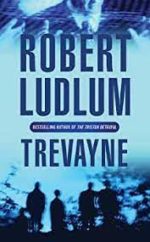
Trevayne
KSh 650.00Trevayne was a self-made millionaire by the time he was thirty. Then he went into government, carving out a brilliant and honourable career. Now he is head of one of the biggest foundations in the USA. Fearless, intelligent and incorruptible, he thought no one could touch him…Then his investigation into the ‘secret government’ led him beyond the corridors of official power into a nightmare maze where Mafia leaders and ‘legitimate’ billionaires mixed, where even the Presidency can be bought and sold. And where a man like Trevayne could be a dreaded enemy, a duped victim, or maybe, just maybe, a king.
-
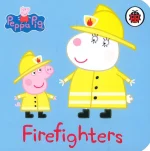
Peppa: Fire Fighter
KSh 495.00Are you looking for a book that your child will love to learn from?
Grab yourself a copy of Firefighters from Peppa Pig. This small board book comes full of Peppa Pig characters your child will recognise and an easy to read font that you can use to read along with your child as they enjoy a story with Peppa Pig.
Peppa is learning all about firefighters. Firefighters rescue people and put out fires!
-
The Ultimate Question: Driving Good Profits and True Growth Hardcover
KSh 2,995.00Based on extensive research, The Ultimate Question shows how companies can rigorously measure Net Promoter statistics, help managers improve them, and create communities of passionate advocates that stimulate innovation. Vivid stories from leading-edge organizations illustrate the ideas in practice.
Practical and compelling, this is the one book—and the one tool—no growth-minded leader can afford to miss.
-
The 8th Habit: From Effectiveness to Greatness (The Covey Habits Series) Paperback
KSh 1,695.00In the more than twenty-five years since its publication, The 7 Habits of Highly Effective People has become an international phenomenon with more than twenty-five million copies sold. Tens of millions of people in business, government, and schools have dramatically improved their lives and organizations by applying the principles of Stephen R. Covey’s classic book.
The world, however, is a vastly changed place. Being effective as individuals and organizations is no longer merely an option—it’s a requirement for survival. But in order to thrive, innovate, excel, and lead in what Covey calls the “New Knowledge Worker Age,” we must build on and move beyond effectiveness. In this era of human history, our call is for greatness—holistic fulfillment, passionate execution, and significant contribution.
Accessing the higher levels of human genius in today’s new reality requires a change in thinking: a new mindset and a new skill-set—in short, a new habit. The crucial challenge of our world today is this: to find our voice and inspire others to find theirs. It is what Covey calls the 8th Habit. The 8th Habit is the answer to the soul’s yearning for greatness, the organization’s imperative for significance and superior results, and humanity’s search for its “voice.”
Covey’s books have transformed the way we think about ourselves, our purpose in life, our organizations, and about humankind. Just as The 7 Habits of Highly Effective People helped us focus on effectiveness, The 8th Habit shows us the
-
First Aid Manual 11th Edition
KSh 2,940.00The 11th edition of this essential first aid manual provides expert advice on how to treat a wide range of medical issues, including how to treat babies and children. First aiders will learn how to attend to over 100 different conditions from splinters, sprained ankles to unresponsive casualties, and how to use essential equipment.
Discover the best ways to manage a situation safely and how to assess sick and injured people effectively. This first aid book is set up with easy-to-understand anatomy sections that explain the risks involved with particular injuries or conditions. Discover every life-saving technique you need to know with step-by-step photography, all shot in-situ to reflect real-life situations. It also includes updated illustrations redrawn in the simplest, clearest style to focus on the vital information you need to know in a crisis.
-

Disney Princess: Party Pack! (Party Bag Fillers)
KSh 595.00Make sure everyone’s favourite princesses make a guest appearance at your party, with these mini activity books! Bursting with games, puzzles, colouring and activities, join the Disney Princesses for hours of fun.
-

Blockchain Basics: A Non-Technical Introduction in 25 Steps 1st ed. Edition
KSh 1,960.00This book bridges the gap that exists between purely technical books about the blockchain and purely business-focused books. It does so by explaining both the technical concepts that make up the blockchain and their role in business-relevant applications.
-

Can-do Crispies (Bake a Wish)
KSh 395.00Lily’s going to be in the school’s Easter show, but she’s very nervous. She keeps forgetting the words to the song. It’s a good thing they have Grandma’s magical jar which has just the right recipe to help – can-do crispies! Lily eats one bite and feels better already.
-
An Introduction to Community and Public Health
KSh 19,000.00Navigate 2 Advantage Access For An Introduction To Community & Public Health, Ninth Edition Is A Digital-Only Access Code That Unlocks A Comprehensive And Interactive Ebook, Student Practice Activities And Assessments, A Full Suite Of Instructor Resources, And Learning Analytic Reporting Tools. The Ninth Edition Of An Introduction To Community & Public Health Provides The Latest Trends And Statistics In Community Health. With An Emphasis On Developing The Knowledge And Skills Necessary For A Career In Health Education, This Best-Selling Introductory Text Covers Such Topics As Epidemiology, Community Organization, Program Planning, Minority Health, Health Care, Mental Health, Environmental Health, Drugs, Safety, And Occupational Health. A Robust Pedagogy And Navigate 2 Advantage Access Help Students Understand And Retain Key Learning Objectives And Better Prepare For Class.
-
Forensic Pathology Principles and Practice
KSh 60,000.00Forensic Pathology is a comprehensive reference that uses a case-oriented format to address, explain and guide the reader through the varied topics encountered by forensic pathologists. Developed in response to a severe void in the literature, the book addresses topics ranging from medicolegal investigation of death to death scene investigation, forensic autopsy, and artifacts of resuscitation as well as complications of medical therapy, forensic osteology, forensic odontology, forensic photography, and death certification. The book includes various types of cases, including sudden natural death, asphyxia, motor vehicle collisions, death in custody, child abuse and elder abuse, acute psychiatric and emotional deaths, and pregnancy. It contains sample descriptions of pathological lesions which serve to aid pathologists in reporting their findings to law enforcement agencies, attorneys, and others involved in investigations of sudden death. The concepts outlined in the text are beautifully illustrated by large, colorful photographs. There are also “Do and Don’t” sections at the end of each chapter that provide guidance for handling the types of cases examined. This work will benefit not only experienced forensic pathologists, but also hospital pathologists who occasionally performs medicolegal autopsies; doctors in training; medical examiners; law enforcement personnel; crime scene investigators; attorneys; and fellows and students of the medical sciences.