
-
-

Women, Land and Justice in Tanzania (African Edition)
KSh 2,000.00Recent decades have seen a wave of land law reforms across Africa, in the context of a “land rush” and land-grabbing. But how has this been enacted on the ground and, in particular, how have women experienced this? This book seeksto re-orientate current debates on women’s land rights towards a focus on the law in action. Drawing on the author’s ethnographic research in the Arusha region of Tanzania, it explores how the country’s land law reforms have impacted on women’s legal claims to land. Centring on cases involving women litigants, the book considers the extent to which women are realising their interests in land through land courts and follows the progression of women’s claims to land – from their social origins through processes of dispute resolution to judgment.
Dancer’s work explores three central issues. First, it considers the nature of women’s claims to land in Tanzanian family contexts,the value of land in an era of land reform and the ‘land rush’ across Africa, and the extent to which the social issues raised are addressed by Tanzania’s current laws and legal system. Secondly, it examines how agency and power relations between social and legal actors engaged in legal processes affect women’s access to justice and the progression of claims. Thirdly, it explores Tanzanian concepts of justice and rights and how women’s claims have been judged by land courts in practice.Helen Dancer is a lecturer in Law at the University of Brighton. She practised as a barrister in England specialising in family legal aid cases prior to training as a legal anthropologist. She is also a consultant for Future Agricultures at IDS, University of Sussex. Her areas of research interest include law and development, gender and land, and human rights and legal pluralism.
-
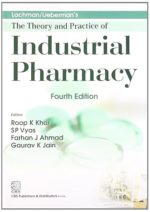
Lachman/Lieberman’s The Theory And Practice Of Industrial Pharmacy, 4th edition
The theory and practice of industrial pharmacy fourth edition, edited by roop k. Khar, s. P. Vyas, farhan j. Ahmad and gaurav k. Jain, and published by cbs publishers and distributors, is a comprehensive book for students of pharmacy and also practitioners. It is thoroughly revised and updated, and is completely rewritten to keep pace with the changes in pharmacy curricula, keeping its distinction in the field of industrial pharmacy. By presenting the topics in layers from basics to in-depth discussions, the text enables easy conception of a to z of product development.
-

Betrayed (House of Night)
KSh 650.00It seems that (un)life is going pretty well for Zoey Redbird. She’s settled in at the House of Night finishing school and is coming to terms with the vast powers the vampyre goddess, Nyx, has given her. She even has a boyfriend …or two. Best of all, Zoey finally feels she has found somewhere she belongs. Then the unthinkable happens. Human teenagers are being killed, and all the evidence points to the vampires at Zoey’s school. While danger stalks the humans from Zoey’s past life, she begins to realise that the very powers that made her so unique might also threaten those she loves. Then, when she needs her new friends the most, death strikes the House of Night. Zoey finds herself facing a betrayal that could break her heart and jeopardise the very fabric of her world
-
-
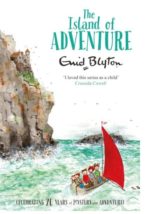
The Island Of Adventure
KSh 895.00Begin the Adventure series with The Island of Adventure by Enid Blyton, where Jack, Philip, Dinah, and Lucy-Ann explore a mysterious island full of secrets, caves, and danger.
For Philip, Dinah, Lucy-Ann and Jack, the holiday in Cornwall is everything they’d hoped for – until they begin to realise that something very sinister is taking place on the mysterious Isle of Gloom. But they’re not prepared for the adventure that awaits them in the abandoned copper mines and secret tunnels beneath the sea.
-
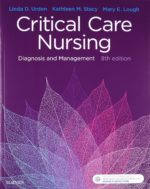
Critical Care Nursing: Diagnosis and Management 8th Edition by Linda D. Urden
Get a firm understanding and mastery of the unique issues and procedures involved in critical care nursing with Critical Care Nursing: Diagnosis and Management, 8th Edition. Praised for its comprehensive coverage and clear organization, this market-leading text offers a great foundation in the realities and challenges of today’s critical care unit that’s perfect for both nursing students and practicing nurses alike. This new edition also features enhanced integration of QSEN and interprofessional collaborative practice, plus expanded coverage of leadership, post-ICU outcomes and highly contagious infections. Revamped case studies, Patient Teaching boxes, Evidence-Based Practice boxes, Patient Safety Alerts, and other learning tools further develop your critical thinking skills and prepare you for success in high-acuity, progressive, and critical care settings.
UNIQUE! Nursing management plans of care feature approximately 35 NANDA-I nursing diagnoses to provide a detailed, ready-to-use, clinically current reference for safe, effective patient care.
Consistent organization within each body-system unit provides a systematic framework for learning and for CCRN and PCCN certification preparation. It also serves as a great reference for clinical practice.
Pharmacologic Management tables offer quick summaries of the drugs most often used in critical care.
NEW! Enhanced QSEN integration makes it easier to link text content to the various QSEN competencies through the addition of QSEN-related questions in case studies, retitled features and boxes, QSEN content icons, and highlighted QSEN information throughout.
UNIQUE! Integration of interprofessional collaborative practice incorporates the various IPEC competencies ― such as Values & Ethics for Interprofessional Practice, Roles & Responsibilities, Interprofessional Communication, and Teams & Teamwork ― into the text content and case studies.
NEW! Enhanced focus on core content directs readers’ attention to routine adult critical care situations and minimizes the attention given to issues treated by specialized facilities.
NEW! Revamped case studies feature updated scenarios and information to reflect the current “flavor” of high-acuity, progressive, and critical care settings ― with patients being seen in a variety of settings. These scenarios help readers “scaffold” learning and apply chapter content to true-to-life clinical situations.
NEW! Content on post-ICU outcomes has been added to chapters on therapeutic management and disorders to provide readers with a more holistic perspective on the critical care patient experience.
NEW! Expanded leadership content places a fresh focus on the emerging importance of nursing leadership to ensure optimal patient outcomes.
NEW! Added content on highly contagious infections has been incorporated into the chapter on sepsis to keep readers abreast of this ever-changing area of interest.
NEW! Links to 15 sample skills from Elsevier Clinical Skills give readers a foundation in mastering critical care skills.
NEW! Enhanced Patient Teaching boxes feature more specific and practical content for at-the-bedside patient care.
NEW! Additional animations have been added to the Evolve companion website.
NEW! Updated content throughout reflects changes in nursing, medical, and collaborative care of patients in high-acuity, progressive, and critical care settings. -

spotlight integrated science grade 9
KSh 815.00It is a learner’s book built for Grade 9 under the current Competency-Based Curriculum (CBC) in Kenya.
It’s meant to give a broad, foundational introduction to science — not just one branch (like biology or physics), but an integrated survey across multiple disciplines: biology, chemistry, physics, and health science.
🎯 Purpose & Educational Approach
The book aims to:
Help learners build scientific knowledge, problem-solving skills, and scientific literacy that they can apply in everyday life and future studies.
Encourage inquiry-based learning (asking questions, doing experiments, observing results, analyzing) — not just memorizing facts.
Promote critical thinking, creativity, and innovation, by having learners do experiments, investigations, projects, and real-life application tasks.
Integrate cross-cutting themes beyond science: environmental awareness, ICT (digital literacy), and even entrepreneurship, linking science to real-world contexts.
Offer a learner-friendly format: explanations illustrated with diagrams, charts, and photographs; plus a mix of class activities, homework projects, and self-assessment exercises.
✏️ What’s Inside — Typical Topics & Structure
While topics may vary slightly by syllabus edition, typical content includes:
Living things and their environment — nutrition in plants, photosynthesis, reproduction in plants, seed/fruit dispersal, ecology, energy flow, food chains/webs.
Basic biology and ecosystems — classification of organisms, interdependence of life, symbiosis, parasitism, saprophytism.
Fundamental chemistry — matter, mixtures, chemical reactions, maybe periodic table and basic chemical concepts (though detailed chemistry comes later). The integrated design means chemistry is introduced alongside biology and physics.
Basic physics/physical science — energy, matter, possibly concepts related to physical phenomena and forces (since Integrated Science spans physical world understanding).
Health science and everyday science applications — hygiene, sanitation, nutrition, environmental conservation, and using science knowledge for real-life wellbeing and sustainability.
Each section tends to include: explanations + illustrations, practical experiments or investigations, group work or project work, self-assessment or class assessment tasks.
📈 Why It Matters
It lays the foundation for STEM pathways at senior school level — giving learners strong grounding before they specialize.
It fosters a scientific mindset: curiosity, critical thinking, problem-solving, and evidence-based decision making — useful beyond school, in everyday life.
By integrating ICT, environment and entrepreneurship themes, it bridges school science with real-world challenges — preparing learners to apply science creatively and responsibly.

-
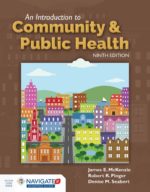
An Introduction to Community and Public Health
KSh 19,000.00Navigate 2 Advantage Access For An Introduction To Community & Public Health, Ninth Edition Is A Digital-Only Access Code That Unlocks A Comprehensive And Interactive Ebook, Student Practice Activities And Assessments, A Full Suite Of Instructor Resources, And Learning Analytic Reporting Tools. The Ninth Edition Of An Introduction To Community & Public Health Provides The Latest Trends And Statistics In Community Health. With An Emphasis On Developing The Knowledge And Skills Necessary For A Career In Health Education, This Best-Selling Introductory Text Covers Such Topics As Epidemiology, Community Organization, Program Planning, Minority Health, Health Care, Mental Health, Environmental Health, Drugs, Safety, And Occupational Health. A Robust Pedagogy And Navigate 2 Advantage Access Help Students Understand And Retain Key Learning Objectives And Better Prepare For Class.
-
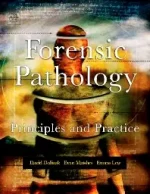
Forensic Pathology Principles and Practice
KSh 60,000.00Forensic Pathology is a comprehensive reference that uses a case-oriented format to address, explain and guide the reader through the varied topics encountered by forensic pathologists. Developed in response to a severe void in the literature, the book addresses topics ranging from medicolegal investigation of death to death scene investigation, forensic autopsy, and artifacts of resuscitation as well as complications of medical therapy, forensic osteology, forensic odontology, forensic photography, and death certification. The book includes various types of cases, including sudden natural death, asphyxia, motor vehicle collisions, death in custody, child abuse and elder abuse, acute psychiatric and emotional deaths, and pregnancy. It contains sample descriptions of pathological lesions which serve to aid pathologists in reporting their findings to law enforcement agencies, attorneys, and others involved in investigations of sudden death. The concepts outlined in the text are beautifully illustrated by large, colorful photographs. There are also “Do and Don’t” sections at the end of each chapter that provide guidance for handling the types of cases examined. This work will benefit not only experienced forensic pathologists, but also hospital pathologists who occasionally performs medicolegal autopsies; doctors in training; medical examiners; law enforcement personnel; crime scene investigators; attorneys; and fellows and students of the medical sciences.