
-

African Animal Tales: Greedy Zebra
KSh 695.00When the animals discovere a cave full of furs and skins, they discarde their drab skins for glossy new ones. Greedy zebra, arrives late, after a delicious snack, only to find a few stripes of black cloth. He squeezes into them but Greedy Zebra iis too big for them and his new coat bursts open!
The story of how all the animals chose their clothing, except for Greedy Zebra, who had to take the left-over pieces . . .
-
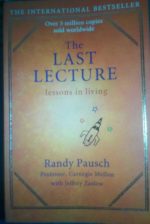
The Last Lecture – Lessons In Living
KSh 1,095.00The Last Lecture is a New York Times best-selling book co-authored by Randy Pausch—a professor of computer science, human-computer interaction, and design at Carnegie Mellon University in Pittsburgh, Pennsylvania—and Jeffrey Zaslow of the Wall Street Journal.
-
Intellectual Property Law in East Africa
KSh 3,217.00The past half century in Uganda has witnessed both concern and interest in copyright and neighbouring rights. This is evident in the laws and treaties initiated by both the Uganda Government and the international community, aimed at enabling copyright holders to realize the benefi ts of their intellectual works.
-
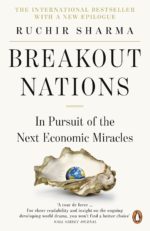
Breakout Nations: In Pursuit of the Next Economic Miracles
KSh 650.00In breakout nations Ruchir Sharma shows why the economic ‘mania’ of the 21st century, with its unshakable faith in the power of emerging markets to continue growing at the astoundingly rapid and uniform pace of the last decade, is wrong. Which countries will rise to become the next economic stars? Published By Penguin Group on 2013
-

Boyz Rule : Water Rats
KSh 295.00Dive into adventure with the Boyz Rule gang in Water Rats—a splash-filled story of friendship, fun, and daring challenges on the water!
While Tom and Joey are playing in the water at their local pool, they make an amazing discovery in the lost-and-found stakes.
-

Fred the Foal
KSh 395.00Fred the Foal is a charming children’s storybook about a playful young horse discovering the world around him. With themes of curiosity, growth, and friendship, it’s an ideal read for little animal lovers and early learners.
-

The Wide Window (A Series of Unfortunate Events)
KSh 650.00There is nothing to be found in the pages of A Series of Unfortunate Events but misery and despair. You still have time to choose another international best-seller to read. But if you must know what unpleasantries befall the charming and clever Baudelaire children read on . . . In The Wide Window we encounter a story that includes a hurricane, a signalling device, hungry leaches, cold cucumber soup, a horrible villain and a doll named Pretty Penny. With 5 million copies sold in the UK alone, one might consider Lemony Snicket’s A Series of Unfortunate Events to make him one of the most successful children’s authors of the past decade. We, however, consider these miserable so-called adventure stories and the Hollywood film starring Jim Carrey that accompanied the books for children as nothing more than a dreadful mistake.
-

Operational Risk Management Paperback
KSh 1,295.00Operational Risk is one of the important arms of the risk management triangle, the other two being Credit Risk and Market (Treasury) Risk. Any organisation, particularly in the banking sector, is squarely exposed to operational risks emanating within or outside the organisation.There was no precise definition of operational risk until Basel Accord II came into being in June 2004. For the first time in the history of global banking, operational risk capital charge has been made a mandatory requirement in banking. This certainly puts in a lot of stress and strain on a bank’s management. The entire gamut of operational risk has been visited and covered in the appropriate chapters of this book.
-

Community Health Nursing: A Practical Guide 1st Ed
KSh 4,500.00The book is structured to give a broad but detailed view of community health nursing, with emphasis on:
Population-Focused Care: The book emphasizes caring for groups, communities, and populations — not just individual patients.
Roles & Functions of the Community Health Nurse: It maps out what community health nurses do: their roles in health promotion, disease prevention, outreach, community assessment, home visits, and more.
Public Health Foundations: Epidemiology, communicable diseases, communicable-disease prevention, chronic illness, mental health, addiction, homelessness and social-determinant challenges.
Special Populations & Lifespan Approach: Care for infants, children, adolescents, adults; considerations for vulnerable groups (e.g. mentally ill, homeless, substance abuse) and families.
Community & Family-Focused Work: Tools and practices for community assessment, family assessment, home visits, planning and delivering care to households and community aggregates rather than just individuals.
Health Promotion & Disease Prevention: A strong orientation toward prevention (primary, secondary) — educating communities, promoting wellness, preventing disease rather than just treating it.
Comprehensive Yet Accessible Format: The book adopts an outline-style, which makes it easier to follow and ideal for self-study or as a reference.
-
Forensic Pathology Principles and Practice
KSh 60,000.00Forensic Pathology is a comprehensive reference that uses a case-oriented format to address, explain and guide the reader through the varied topics encountered by forensic pathologists. Developed in response to a severe void in the literature, the book addresses topics ranging from medicolegal investigation of death to death scene investigation, forensic autopsy, and artifacts of resuscitation as well as complications of medical therapy, forensic osteology, forensic odontology, forensic photography, and death certification. The book includes various types of cases, including sudden natural death, asphyxia, motor vehicle collisions, death in custody, child abuse and elder abuse, acute psychiatric and emotional deaths, and pregnancy. It contains sample descriptions of pathological lesions which serve to aid pathologists in reporting their findings to law enforcement agencies, attorneys, and others involved in investigations of sudden death. The concepts outlined in the text are beautifully illustrated by large, colorful photographs. There are also “Do and Don’t” sections at the end of each chapter that provide guidance for handling the types of cases examined. This work will benefit not only experienced forensic pathologists, but also hospital pathologists who occasionally performs medicolegal autopsies; doctors in training; medical examiners; law enforcement personnel; crime scene investigators; attorneys; and fellows and students of the medical sciences.