
-
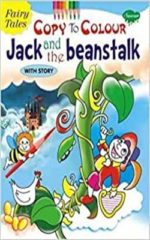
Fairy Tales Copy to Colour: Jack and the Beanstalk
KSh 395.00Sawan presents Fairy Tales Copy to Colour: Jack and the Beanstalk, Thise book is a 2 in 1 concept includes Colouring and fairytale story of your favourite character. It promotes creativity, helps kids develop skills and even improves concentration. Thise Colouring book Collection contains amazing Colouring pages to keep your young one occupied in a fun filled activity for several weekends.
-

ANIMAL WORLD STICKERS: IN THE WILD
KSh 495.00Match stickers with wild animal silhouettes while learning their names and more about them!
-

Conditions in Occupational Therapy-Effect on Occupational Performance Edition: 6
KSh 19,500.00This updated 6th Edition is fully aligned with the most current DSM-5 and Occupational Therapy Practice Framework, 4th Edition, and adds new chapters reflecting recent advances in the management of infectious diseases, general deconditioning, musculoskeletal pain, amputations, and sickle cell anemia. Each chapter follows a consistent format, presenting an opening case followed by descriptions and definitions, etiology, incidence and prevalence, signs and symptoms, diagnosis, course and prognosis, medical/surgical management, impact on occupational performance, and two case illustrations.
Rounded out with robust instructor resources and new full-color imagery, this bestselling resource is an essential tool for today’s occupational therapy and occupational therapy assistant students.
NEW! Five new chapters detail current practices in the management of:
-Infectious Diseases
-General Deconditioning
-Musculoskeletal Pain (back, neck, upper and lower extremity)
-Amputations
-Sickle Cell Anemia
NEW! Full-color images clarify concepts and procedures in vibrant detail.
Updated content and references reflect the latest insights on the neurological basis for disorders, brain/behavior relationships for psychiatric disorders, and a consistent list of client factors affected by disorder.
Integrated pathophysiology and occupational therapy coverage ensure a comprehensive understanding without the need for multiple texts.
An intuitive organization groups disorders logically for fast, efficient reference.
Chapter-ending Case Studieshelp you apply content to real-life clinical situations, including both pediatric and adult cases where relevant.
Introductory Cases immerse you in chapter content for greater retention and understanding.
In-text learning aids, including key terms, study questions, recommended learning resources, and special boxes, tables, and displays help reinforce key concepts. -
The Brethren: A Novel
KSh 400.00The Church of the Brethren is an Anabaptist Christian denomination in the Schwarzenau Brethren tradition (German: Schwarzenauer Neutäufer “Schwarzenau New Baptists”) that was organized in 1708 by Alexander Mack in Schwarzenau, Germany during the Radical Pietist revival.[1] The denomination holds the New Testament as its only creed. Historically, the church has taken a strong stance for nonresistance or Christian pacifism—it is one of the three historic peace churches, alongside the Mennonites and Quakers. Distinctive practices include believer’s baptism by forward trine immersion; a threefold love feast consisting of feet washing, a fellowship meal, and communion; anointing for healing; and the holy kiss. Its headquarters are in Elgin, Illinois, United States.
The first Brethren congregation was established in the United States in 1723. These church bodies became commonly known as “Dunkards” or “Dunkers”, and more formally as German Baptist Brethren. The Church of the Brethren represents the largest denomination descended from the Schwarzenau Brethren, and adopted this name in 1908; in 1926 there was an exodus of some conservative members of the Church of the Brethren, who formed the Dunkard Brethren Church.[2]
KSh 650.00 -

The Wide Window (A Series of Unfortunate Events)
KSh 650.00There is nothing to be found in the pages of A Series of Unfortunate Events but misery and despair. You still have time to choose another international best-seller to read. But if you must know what unpleasantries befall the charming and clever Baudelaire children read on . . . In The Wide Window we encounter a story that includes a hurricane, a signalling device, hungry leaches, cold cucumber soup, a horrible villain and a doll named Pretty Penny. With 5 million copies sold in the UK alone, one might consider Lemony Snicket’s A Series of Unfortunate Events to make him one of the most successful children’s authors of the past decade. We, however, consider these miserable so-called adventure stories and the Hollywood film starring Jim Carrey that accompanied the books for children as nothing more than a dreadful mistake.
-
Social Work and Mental Health (Transforming Social Work Practice Series)
With 1 in 4 people experiencing a mental health problem in any given year, mental health is a more important part of social work training than ever before, and all successful social workers need to understand the core values, skills and knowledge that underpin excellent practice in a modern mental health system.
Written as an accessible introduction to the complex issues around mental health, this book has become a classic in its field. Law and policy are clearly outlined while the authors give space to important ethical considerations when working with the most vulnerable in society. There are clear links between policy, legislation and real life practice as well as a wealth of learning features.
-

ICD-10 Volume 2: International Statistical Classification of Diseases and Related Health Problems : Instruction Manual
This first volume contains the classification at the three and four-character levels, the classification of the morphology of neoplasms, special tabulation lists for mortality and morbidity, definitions, and the nomenclature regulations. The volume also reproduces the report of the International Conference, which indicates the many complex consideration behind these revisions.
-
Qualitative Research Design
KSh 7,700.00Qualitative Research Design: An Interactive Approach provides researchers and students with a user-friendly, step-by-step guide to planning qualitative research. It shows how the components of design interact with each other, and provides a strategy for creating coherent and workable relationships among these design components, highlighting key design issues. Written in an informal, jargon-free style, the new Third Edition incorporates examples and hands-on exercises.
-
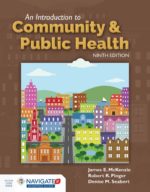
An Introduction to Community and Public Health
KSh 19,000.00Navigate 2 Advantage Access For An Introduction To Community & Public Health, Ninth Edition Is A Digital-Only Access Code That Unlocks A Comprehensive And Interactive Ebook, Student Practice Activities And Assessments, A Full Suite Of Instructor Resources, And Learning Analytic Reporting Tools. The Ninth Edition Of An Introduction To Community & Public Health Provides The Latest Trends And Statistics In Community Health. With An Emphasis On Developing The Knowledge And Skills Necessary For A Career In Health Education, This Best-Selling Introductory Text Covers Such Topics As Epidemiology, Community Organization, Program Planning, Minority Health, Health Care, Mental Health, Environmental Health, Drugs, Safety, And Occupational Health. A Robust Pedagogy And Navigate 2 Advantage Access Help Students Understand And Retain Key Learning Objectives And Better Prepare For Class.
-
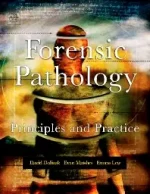
Forensic Pathology Principles and Practice
KSh 60,000.00Forensic Pathology is a comprehensive reference that uses a case-oriented format to address, explain and guide the reader through the varied topics encountered by forensic pathologists. Developed in response to a severe void in the literature, the book addresses topics ranging from medicolegal investigation of death to death scene investigation, forensic autopsy, and artifacts of resuscitation as well as complications of medical therapy, forensic osteology, forensic odontology, forensic photography, and death certification. The book includes various types of cases, including sudden natural death, asphyxia, motor vehicle collisions, death in custody, child abuse and elder abuse, acute psychiatric and emotional deaths, and pregnancy. It contains sample descriptions of pathological lesions which serve to aid pathologists in reporting their findings to law enforcement agencies, attorneys, and others involved in investigations of sudden death. The concepts outlined in the text are beautifully illustrated by large, colorful photographs. There are also “Do and Don’t” sections at the end of each chapter that provide guidance for handling the types of cases examined. This work will benefit not only experienced forensic pathologists, but also hospital pathologists who occasionally performs medicolegal autopsies; doctors in training; medical examiners; law enforcement personnel; crime scene investigators; attorneys; and fellows and students of the medical sciences.