
This classic, reader-friendly text provides a concise, comprehensive and clinically oriented survey of the human nervous system. Guides to understand the principles of physiotherapy and techniques to manage neurogenic dysfunctions and how all the components of the nervous system fit together and work as a cohesive unit. The diversity of clinical presentation, response and outcome of treatment all have to be studied together to check the long duration of morbidity and physical disability associated with neural disorders. This book explains time tested methods adopted in dealing with neurological disorders and even suggests new concepts in management that are not so popular. It will help students of basic neuroscience as well as residents and physicians to deal with neural disorders.
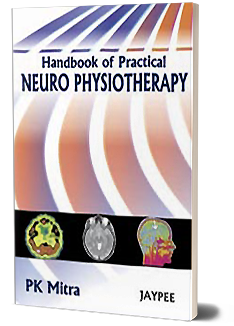
Handbook of Practical Neuro physiotherapy by Pushpal K Mitra
Discover Handbook of Practical Neuro physiotherapy by Pushpal K. Mitra – a comprehensive guide covering clinical techniques, rehabilitation strategies, and practical applications in neuro physiotherapy for students and professionals.
This classic, reader-friendly text provides a concise, comprehensive and clinically oriented survey of the human nervous system. Guides to understand the principles of physiotherapy and techniques to manage neurogenic dysfunctions and how all the components of the nervous system fit together and work as a cohesive unit. The diversity of clinical presentation, response and outcome of treatment all have to be studied together to check the long duration of morbidity and physical disability associated with neural disorders. This book explains time tested methods adopted in dealing with neurological disorders and even suggests new concepts in management that are not so popular. It will help students of basic neuroscience as well as residents and physicians to deal with neural disorders.
Customer Reviews
There are no reviews yet.
Related products
-

Kumar and Clark’s Clinical Medicine, 10th Edition
KSh 13,440.00Now in its tenth edition, Kumar & Clark’s Clinical Medicine is fully updated and revised under a new team of editors.
Featuring new chapters covering:
o Diagnosis: the art of being a doctor – helping readers to develop a confident clinical method in interactions with patients
o Elderly medicine, frailty and multimorbidity
o Public health
o Surgery
o Evidence-based medicine
o Sepsis and the treatment of bacterial infection
o Haematological Oncology
o Venous thromboembolic disease
o Hypertension
o Men’s health
Enhanced clinical skills content has been added to most chapters – helping readers tailor history-taking and examination skills to specific specialty-based contexts.
Bonus online content – including self-assessment, common clinical and international cases, cardiovascular and respiratory audio material, clinical examination videos and bite-sized topic pages covering major conditions.
Heavily revised throughout with smaller chapters to ease navigation, added introductions and system overviews included for most chapters. -
The Great Influenza: The Story of the Deadliest Pandemic in History -Paperback
KSh 650.00Magisterial in its breadth of perspective and depth of research, The Great Influenza provides us with a precise and sobering model as we confront the epidemics looming on our own horizon. As Barry concludes, “The final lesson of 1918, a simple one yet one most difficult to execute, is that…those in authority must retain the public’s trust. The way to do that is to distort nothing, to put the best face on nothing, to try to manipulate no one. Lincoln said that first, and best. A leader must make whatever horror exists concrete. Only then will people be able to break it apart.”
At the height of World War I, history’s most lethal influenza virus erupted in an army camp in Kansas, moved east with American troops, then exploded, killing as many as 100 million people worldwide. It killed more people in twenty-four months than AIDS killed in twenty-four years, more in a year than the Black Death killed in a century. But this was not the Middle Ages, and 1918 marked the first collision of science and epidemic disease.
-

Oxford Handbook of Clinical Specialties (Oxford Medical Handbooks
KSh 6,580.00Now in its 25th year, the Oxford Handbook of Clinical Specialties has been revised and updated by a trusted author team to bring you practical, up-to-date clinical advice and a unique outlook on the practice of medicine. Twelve books in one, this is the ultimate guide to the core clinical
specialties for students, junior doctors, and specialists.This edition features a new and improved referencing system guided by a team of junior doctors, ensuring that the text is packed with valuable references to the most salient data and guidelines across the specialties. Each chapter has been updated on the advice of a team of specialists, to bring you
everything you need for any eventuality on the ward or in the field. This essential handbook guides the reader through the management of an unprecedented spectrum of conditions and eventualties, from sexual health to major incident management. Compact and filled with high quality artwork, directions
to further reading, and wise advice, this book is an ideal resource for revision and reference on the go.With its companion volume, the Oxford Handbook of Clinical Medicine, the Oxford Handbook of Clinical Specialties offers a unique perspective on the practice of medicine. Filled with wit, wisdom, and humanity, this book draws on literature, history, and personal experience to teach a philosophy of
medicine that always puts the patient at the centre of compassionate care. It is a trustworthy companion for anyone with the spirit of self-improvement and a passion for their practice. -
Smith and Aitkenhead’s Textbook of Anaesthesia, 7th Edition
KSh 18,612.00This highly successful textbook is internationally renowned as a core text for trainee anaesthetists and is essential reading for candidates for the Fellowship of Royal College of Anaesthetists and similar examinations. The previous 6th edition was awarded First Prize at the BMA Medical Book awards.
The book provides full coverage of the sciences underpinning practice in anaesthesia, critical care and pain management together with details of clinical anaesthesia and perioperative care. In combining these aspects, a generation of anaesthetists have found the textbook invaluable during the first few years of training as well as when preparing for the FRCA and similar professional examinations.
The goal for this Seventh Edition has remained to equip the reader with the basic knowledge and practical considerations required to administer anaesthesia and perioperative care for a whole range of surgical conditions in patients with all common medical comorbidities. Reflecting the expanding role of anaesthesia beyond the operating theatre it also includes essential material related to safety and quality assurance, consent, resuscitation, intensive care medicine, pre-hospital care and chronic pain management.
-
Muir’s Textbook of Pathology
KSh 3,800.00First published in 1924, Muir’s Textbook of Pathology has set a standard in this subject by linking the scientific aspects that underlie pathological processes, relating these pathological changes specific to the various organ systems, and placing all in context for the student of clinical
medicine and surgery. Subsequent editions have retained this popular approach, while introducing novel concepts and taking into account the evolution in the teaching of general pathology that has occurred.This fully-revised 14th edition will ensure that the title retains its preeminence in the field with a clearly defined and easy-to-follow structure, new photographs and explanatory line diagrams, all in full color, and applicability to both systems-based and problem-based undergraduate courses.
Focusing on core material without neglecting up-to-the-minute detail, this book is a key text for students, but also has significant appeal for pathology residents. -
The Handbook of Medical Image Perception and Technique
KSh 11,200.00This state-of-the-art book reviews key issues and methods in medical image perception research through associated techniques, illustrations and examples. Written by key figures in the field, the book covers a range of topics including the history of medical image perception research, the basics of vision and cognition, and dedicated application areas, especially those concerned with the interface between the clinician and the display of medical image data. It summarizes many of the basic techniques used to conduct and analyze medical image perception and observer performance research, allowing readers to understand basic research techniques so they can adopt them for use in their own studies. Written for both newcomers to the field and experienced researchers, this book provides a broad overview of medical image perception, and will serve as a reference volume for years to come.
-
Contact Lens Practice
KSh 29,400.00In this thoroughly revised and updated third edition of Contact Lens Practice, award-winning author, researcher and lecturer, Professor Nathan Efron, provides a comprehensive, evidence-based overview of the scientific foundation and clinical applications of contact lens fitting. The text has been refreshed by the inclusion of ten new authors – a mixture of scientists and clinicians, all of whom are at the cutting edge of their specialty. The chapters are highly illustrated in full colour and subject matter is presented in a clear and logical format to allow the reader to quickly hone in the desired information.
-
Pocket Tutor Orthopaedics
KSh 5,500.00Titles in the Pocket Tutor series give practical guidance on subjects that medical students and foundation doctors need help with “on the go”, at a highly affordable price that puts them within reach of those rotating through modular courses or working on attachment.
- Common investigations (ECG, imaging, etc)
- Clinical skills (patient examination, etc.)
- Clinical specialties that students perceive as too small to merit a textbook (psychiatry, renal medicine)
Key points
- Practical, accessible introduction to a subject that students find daunting, but which juniors will encounter as part of orthopaedic and emergency rotations
- Logical, sequential content: relevant basic science; then chapters devoted to the clinical essentials of orthopaedics and the disorders and injuries seen most commonly in practice
- Descriptions of common disorders are enhanced by Clinical Scenarios (Patient presents with…), which help students and trainees to recognise and manage common presenting problems
Be the first to review “Handbook of Practical Neuro physiotherapy by Pushpal K Mitra”