
Based on thirty years in the global oil game, intimate knowledge of African history and direct experience of over forty countries, this comprehensive book shows that Africa’s flaws are not the whole story, when it comes to the continent’s history. A definitive yet original account of the rush for Africa’s oil, this is also a guide to the hidden face of Africa. Duncan Clarke begins by placing African oil issues in their historical context before tackling the issues of power, nationalism and different parties’ strategies for control that have led to today’s oil scene. This book is the ultimate reference work on oil in Africa – which is vital to everyone’s future around the world.

Africa: Crude Continent: The Struggle for Africa’s Oil Prize Paperback
KSh 1,992.00
Based on thirty years in the global oil game, intimate knowledge of African history and direct experience of over forty countries, this comprehensive book shows that Africa’s flaws are not the whole story, when it comes to the continent’s history. A definitive yet original account of the rush for Africa’s oil, this is also a guide to the hidden face of Africa. Duncan Clarke begins by placing African oil issues in their historical context before tackling the issues of power, nationalism and different parties’ strategies for control that have led to today’s oil scene. This book is the ultimate reference work on oil in Africa – which is vital to everyone’s future around the world.
1 in stock
| Author | Duncan Clarke |
|---|
Customer Reviews
There are no reviews yet.
Related products
-
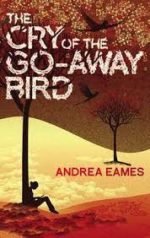
The Cry of the Go-Away Bird
KSh 1,200.00The Cry of the Go-Away Bird’ is the debut novel from Andrea Eames. It revolves around Elise, a white Zimbabwean girl living through her teens on the eve of the Mugabe-sponsored farm invasions at the beginning of this century. The author herself grew up in Zimbabwe before moving to New Zealand with her family at the age of seventeen and there is a strong sense of memoir and personal experience in the novel, which has both positive and negative effects on the narrative.
The main character is drawn very effectively. The natural anxieties felt when emerging into an adult world are uncannily accurate, and allow the reader to relate to Elise and her family as their experiences later become more extreme. However, sometimes the story is so personal that it verges on one-sided. There is more variety, and a more complex array of emotions and motivations among the white characters than the black ones. The black characters are unfathomable and often sinister. Perhaps this is how Elise really sees them, but the novel could have perhaps painted a more complex picture for the reader of the spectrum of attitudes surrounding these massive social upheavals.
Eames makes various attempts to describe the fragile nature of race relations in post-independence Zimbabwe. Often she succeeds admirably, as when Elise’s parents invite a black farm-worker and his wife over for dinner in an effort to make friends. The awkwardness felt by all is palpable and it is a fine piece of writing. Eames clearly has a talent for describing a society in microcosm. There are examples of Eames’ considerable powers of observation elsewhere in the book too. Of the ‘Bush War’ (or War of Independence) it is said, The war felt like a death in the family – someone whose name was never mentioned, who was cut out of photographs. Of Mugabe, Elise says, He was like a hated Headmaster, overbearing and incompetent, towards whom you felt a kind of loyalty. This metaphor demonstrates that Eames is certainly able to express complicated emotions in a clear and artful manner.
There are, however, times in the novel when the writing fails in this respect. Sentences such as We were Whites, and nothing else and The air between us was a different colour, are clumsy and blunt, and have a taste of bitterness that the story does not benefit from.
The action in the novel is heavily weighted towards the last half, when the actual farm invasions and killings of farmers are taking place. In these pages the book does become compelling. Eames successfully renders the panicked atmosphere of a rapidly crumbling way of life, and the events feel both real and shocking.
Overall, though well written, the novel is trying to tell too many stories in too many ways. Elise’s story is cut-off by the dramatic political events occurring, but those events appear as from nowhere and lack real context. The book is still worth reading for a glimpse into this interesting and unfamiliar world, but there may be better novels to come from Andrea Eames.
-
Contemporary psychiatry in Africa : a review of theory, practice and research
KSh 1,740.00This book harnesses the collective wisdom of African Psychiatry and therefore serves as a departure point for ongoing efforts to refine practice in accordance with the best practice and local needs. There are a number of chapters dedicated to a range of conditions, covering the most prevalent as well as some emerging conditions ranging from HIV related psychopathology to eating disorders. Additionally, the book provides a focus on a related and pertinent Sub-specialist field – that of neuropsychiatry. There is a chapter devoted to child and adolescent psychiatry – a sub-specialist area that is sorely underserviced. The elderly too are not forgotten in this book. Whilst much is spoken of the youth, it is well to consider the ageing members of society. Psychiatry and the law have also been adequately tackled through a chapter on forensic mental health. The book is a ‘must-read’ for academicians, researchers and practitioners in different areas of mental health. Postgraduate students pursuing various aspects of mental health, undergraduate medical students and diploma medical students will find this book quite ideal.
-

Beyond White Mischief: The Memoirs of a Tea Planter’s Wife-SHEILA WARD
KSh 395.00When Sheila Ward went off to RADA to train as an actress in the early 1950s, she had no idea of the stormy path her life would take. After a short career as an actress in rep, with all the joys of juggling different roles and the comic possibilities of living in grim digs on very little money, she met and married a tea planter, and went off to live in Africa.
Through Sheila’s diaries, life in Africa springs into sharp relief as she learns to live with snakes, bugs and the recalcitrant servants. Sheila and her husband have four children and gradually adapt to a very different way of life. She meets the author Gerald Durrell, and Joy and George Adamson of Elsa the lioness fame, entertains fellow ex-pats and learns to love the unique terrain of Kenya’s hills.
-
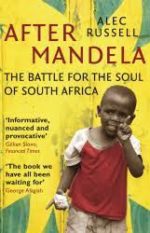
After Mandela: The Battle for the Soul of South Africa-the book we have all been waiting for
KSh 650.00When Nelson Mandela and the African National Congress declared victory over the bitter injustice of apartheid, some thought South Africa’s future was assured. But despite Mandela’s mission of reconciliation, rampant inequality remains; race relations are uneasy, violence is endemic and many in the ANC appear to have lost sight of the liberation ideals. With the election in 2009 of Jacob Zuma, a charismatic populist embroiled in scandal, uncertainty over the trajectory of the nation has only intensified.
South Africa now stands at a crossroads, and award-winning journalist Alec Russell draws on his deep knowledge of the country to tell us how it got there and to give us a compelling account, revised and updated for this edition, of the journey from Mandela to Zuma.
-

Sexuality and Gender Politics in Mozambique: Re-Thinking Gender in Africa
KSh 1,499.00Demonstrates shortcomings in Western feminist conceptualizations, and shows how insights from African feminist thinking may enhance understandings of gender, both in and beyond Africa.
Winner of the 2012 gender research award KRAKA-prisen.
This book is about gender politics in Mozambique over three decades from 1975 to 2005. The book is also about different ways of understanding gender and sexuality. Gender policies from Portuguese colonialism, through Frelimo socialism to later neo-liberal economic regimes share certain basic assumptions about men, women and gender relations. But to what extent do such assumptions fit the ways in which rural Mozambican men and women see themselves? A major line of argument in the book is that gender relations should be investigated, not assumed, and that policies not matching people’s lives are not likely to succeed.
The empirical data, on which the argument is based, are first a unique body of data material collected 1982-1984 by the national women’s organization, the OMM [when the author was employed as a sociologist in the organization] andsecondly data resulting from more recent fieldwork in northern Mozambique.
Importantly inspired by African post-colonial feminist lines of thinking, the book engages in a project of re-mapping and re-interpreting ‘culture andtradition’. In this context, the book investigates in particular matriliny [c. 40 per cent of Mozambique’s population live under conditions of matriliny] and female initiation. The findings open new avenues for gender politics, and for rethinking sexuality and gender – in Africa and beyond. -

Partnership in Higher Education -African Higher Education: Developments and Perspectives
KSh 6,000.00Trends in institutional partnership in higher education have shown tremendous growth in the past three decades. These trends are manifested through the growing initiatives of joint programs that promote collaborative research, academic mobility, joint curriculum development and course delivery, joint bidding for development projects and bench marking. Partnerships in higher education have been used not only as an instrument for institutional development through a wide range of strategic alliances but also as an essential way of introducing new voices to the operations of the universities by initiating new paradigms that bring new perspectives and bear competitive advantage on the partners. As the trend of partnership in higher education grew, scholars in higher education studies have also engaged in conceptualising higher education partnership from academic perspectives, analysing trends and developing models of higher education collaborations.
-
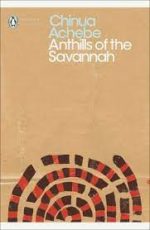
Anthills of the Savannah
KSh 1,600.00He needed to hear Africa speak for itself after a lifetime of hearing Africa spoken about by others Electrifying essays on the history, complexity, diversity of a continent, from the father of modern African literature.
-

High Trust Selling: Make More Money in Less Time with Less Stress
KSh 995.00Do you feel like your career exists somewhere between your last sale and your next one? Are you always searching for the way to bridge the gap and create long-term success? Does it seem that somehow your life is only about your ability to perform on the job?
For too long you have bought into the idea that the business you do and the life you lead are completely separate. What Todd Duncan has learned in his twenty-two years of sales is the polar opposite: When you discover how to connect who you are and what you are about in your selling career, the results will be phenomenal and long-lasting.
No matter what industry you work in or what type of sales position you hold, adopting the practical principles in High Trust Selling will open the door to a new way of thinking and a life beyond your wildest expectations.
“Long-term sales success happens when high trust exists―when you are a trustworthy salesperson running a trustworthy sales business, and when it’s clear to your clients that you are a person of integrity who will not only do what you say but who also has the means to deliver.” ―Todd Duncan
Be the first to review “Africa: Crude Continent: The Struggle for Africa’s Oil Prize Paperback”