
This manual covers the full range of communicable diseases in the African region: skin infections, malaria and other vector-borne diseases, infections transmitted via contaminated food and water, tuberculosis and leprosy, diseases transmitted through animals, haemorrhagic fevers and severe acute respiratory illnesses. In this new edition HIV/AIDS has been covered as a chapter on its own. The authors have also included a new chapter titled Emerging and Re-emerging infections in which diseases such as Rift valley fever, Avian flu and Ebola have been discussed. The target for this book include students in medical training colleges, community health workers, nurses, clinical officers, public health officers, teachers of health workers and indeed all who are interested in and who want to learn about communicable diseases in Africa.
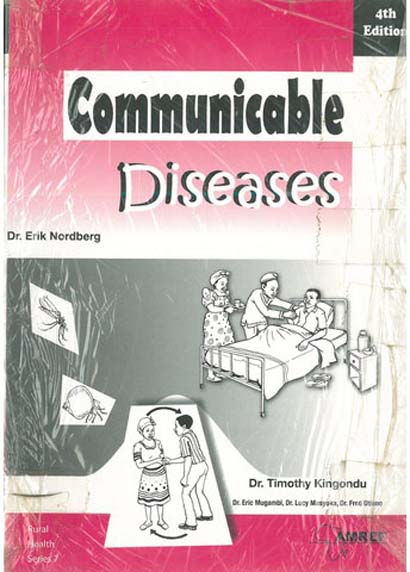
COMMUNICABLE DISEASES 4th edition
KSh 3,000.00
This manual covers the full range of communicable diseases in the African region: skin infections, malaria and other vector-borne diseases, infections transmitted via contaminated food and water, tuberculosis and leprosy, diseases transmitted through animals, haemorrhagic fevers and severe acute respiratory illnesses. In this new edition HIV/AIDS has been covered as a chapter on its own. The authors have also included a new chapter titled Emerging and Re-emerging infections in which diseases such as Rift valley fever, Avian flu and Ebola have been discussed. The target for this book include students in medical training colleges, community health workers, nurses, clinical officers, public health officers, teachers of health workers and indeed all who are interested in and who want to learn about communicable diseases in Africa.
Customer Reviews
There are no reviews yet.
Related products
-
Hutchison’s Clinical Methods International Edition, 25th Edition
KSh 6,370.00Hutchison’s Clinical Methods, 25th International Edition, offers comprehensive guidance on patient assessment, clinical examination, and diagnostic skills, essential for medical students and practitioners worldwide.
Sir Robert Hutchison first published his textbook on Clinical Methods in 1897 and this latest edition maintains its reputation as the go-to guide to learn the core skills every clinician needs in their everyday practice.
Medical students and doctors in training will find essential guidance to taking a full history, examining a patient and interpreting the findings. They will learn the art of understanding, contextualising, communicating and explaining, with the doctor-patient relationship firmly at the centre of their practice. These skills remain essential for every doctor, in addition to modern investigative methods.
The book covers basic principles, different patient groups and all the main body systems. Each chapter includes relevant clinical methods and offers guidance for appropriate investigations. New methods and investigations are incorporated into established patterns of clinical practice to offer a fully integrated approach.
This award-winning textbook remains as relevant today as ever and will be treasured by doctors at all levels of training and practice as an outstanding source of learning and reference.
Key Features-
- All chapters carefully reviewed and updated to reflect modern practice
-
- Written by experts in their field and reviewed by an International Advisory Board – content is relevant to a wide international readership including in the Indian sub-continent, the Middle East and Africa
-
- Covers all the main body systems, including the core areas of respiratory, cardiological, gastrointestinal, neurological and locomotor systems
-
- Text organised by system and problem to aid navigation
-
- Chapters can be read individually, to avoid duplication and need for cross-referencing
-
- Tabulated information and diagrams for clarity and conciseness
-
- Tailored to student needs but suitable for doctors at all levels of training and practice
-
- Winner of multiple awards, including the BMA book awards
-
- New appendix describing the clinical features of COVID-19
Author InformationEdited by Michael Glynn, MA, MD, FRCP, FHEA, Consultant Physician, Gastroenterologist and Hepatologist, Barts Health NHS Trust; Honorary Senior Lecturer, Barts and the London School of Medicine and Dentistry; Former National Clinical Director for GI and Liver Diseases, NHS England and William M Drake, DM FRCP, Consultant Physician/Reader in Medicine, Department of Endocrinology, St Bartholomew’s Hospital, London, UK -
-

McRae’s Orthopaedic Trauma and Emergency Fracture Management, International Edition, 4th Edition
KSh 6,140.00McRae’s Orthopaedic Trauma and Emergency Fracture Management is the essential, best-selling ‘survival guide’ for the orthopaedic surgeon, trainee, resident or practitioner treating injured patients in the Emergency or Orthopaedic Department.
This fourth edition has been extensively updated and rewritten, retaining the essence and underlying principles of McRae’s original book, but with new text and illustrations to ensure it remains at the cutting edge.
This highly regarded book is a companion to McRae’s Elective Orthopaedics, and together these titles provide complete coverage of orthopaedic surgery as relevant to contemporary practice.
New to this edition- New section on theatre preparation and set-up, introducing TULIPS, and helping to manage and prepare for the trauma list
- New chapter on running an efficient practice
Key Features- Comprehensive coverage of the full range of orthopaedic trauma presentations in the Emergency Department, operating theatre, and outpatient clinic
- Clear step-by-step illustrations and text guide you through the relevant anatomy, examination, and investigations before you see the patient
- More than 500 illustrations and 250 x-rays
- Practical procedures, including fracture and joint reduction and immobilisation, explained step-by-step
- Careful descriptions of the principals of trauma surgery and individual surgical procedures provide excellent preparation for the trauma meeting and operating theatre
- Covers postoperative care, complications and follow-up, providing a framework for your fracture clinic
Author InformationBy Timothy O. White, BMedSci, MBChB, FRCSEd (Tr & Orth), MD, Consultant Orthopaedic Trauma Surgeon, Royal Infirmary of Edinburgh; Honorary Senior Lecturer in the Department of Orthopaedic and Trauma Surgery, University of Edinburgh, UK; Samuel P. Mackenzie, BMed Sci, MBChB, MRCSEd, Specialty Trainee in Trauma and Orthopaedic, Royal Infirmary of Edinburgh and Honorary Teaching Fellow, University of Edinburgh, UK -

An Introduction to Forensic Genetics, 2nd Edition
KSh 16,198.00This is a completely revised edition of a comprehensive and popular introduction to the fast moving area of Forensic Genetics. The text begins with key concepts needed to fully appreciate the subject and moves on to examine the latest developments in the field. Now illustrated in full colour throughout, this accessible textbook includes numerous references to relevant casework. With information on the full process of DNA evidence from collection at the scene of a crime to presentation in a legal context this book provides a complete overview of the field.
Key Features:
- Greater in-depth coverage of kinship problems now covered in two separate chapters: one dealing with relationships between living individuals and the other covering identification of human remains.
- New chapter on non-human forensic genetics, including identification of bacteria and viruses, animals and plants.
-
McRae’s Elective Orthopaedics, 7th Edition
KSh 11,000.00This new must-have text is a companion to McRae’s Orthopaedic Trauma and Emergency Fracture Management, extending this much-loved family of reference guides to cover the entire range of modern orthopaedic trauma and elective practice.
McRae’s Elective Orthopaedics is both an examination manual and a text on orthopaedic pathology. It offers a unique combination of subject matter and instructive illustrations in the tradition original author, Ronald McRae, to convey economically and effectively essential information for examination and management of the orthopaedic patient.
This book is organised into two parts. The first covers the relevant applied clinical sciences, and the second adopts a regional approach to the description of individual diseases and their non-operative or operative management. It is suitable for junior orthopaedic surgical trainees as well as other health professionals who encounter patients with musculoskeletal illnesses.
Key Features-
- Internationally respected textbook that provides in-depth knowledge across a breadth of conditions
-
- More than 140 new illustrations present essential information in a unique ‘picture book’ style
-
- Concise and accessible – perfect for orthopaedic surgical trainees
-
- Practical tips, clinical examination pearls and surgical techniques – ideal for use on the wards
-
- Learning enhanced with anatomical illustrations, diagrams, radiographic imaging and clinical photos, accompanied by descriptions of the background to each condition
-
- Updated to include modern investigation and management
-
-
Modern Blood Banking & Transfusion Practices Seventh Edition
KSh 12,460.00Join the generations of students who have embarked on successful careers with a firm foundation in the theory and practice of blood banking and transfusion practices. Denise Harmening’s classic text teaches you not only how to perform must-know tests and tasks, but to understand the scientific principles behind them.
You’ll begin with a review of the basic concepts of red blood cell and platelet preservation, genetics, immunology, and molecular biology. Then you’ll move to the hows and whys of clinical practice. And, you’ll be prepared for new advances in the field.
-
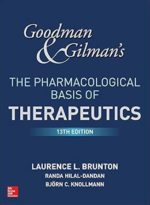
Goodman and Gilman’s The Pharmacological Basis of Therapeutics, 13th Edition
KSh 19,028.00Goodman & Gilman’s: The Pharmacological Basis of Therapeutics, Thirteenth Edition represents the pinnacle of authority and accuracy in describing the actions and uses of therapeutic agents in relation to physiology and pathophysiology. Goodman & Gilman’s careful balance of basic science and clinical application has guided thousands of practitioners and students to a clear understanding of the drugs essential to preventing, diagnosing, and treating disease.
The Thirteenth Edition includes more than 500 color illustrations, with many new figures emphasizing mechanisms of drug action. More than 30 new contributors have added to this edition, while the focus on basic principles is undiminished.
-

Myles Textbook for Midwives, International Edition, 17th Edition
KSh 5,642.00Written by midwives for midwives, Myles Textbook for Midwives has been the seminal textbook of midwifery for over 60 years. It offers comprehensive coverage of topics fundamental to 21st midwifery practice. Co-edited for the second time, by internationally renowned midwife educationalists, Professor Jayne E Marshall and Maureen D Raynor from the United Kingdom with a team of contributors from across the midwifery community it retains its clear, accessible writing style. Most chapters provide useful case studies, websites of key organisations and charities for individuals to access further information. Reflective questions at the end of each chapter as well as annotated further reading aid reflective learning and stimulate discussions relating to continuing professional development.
Key Features-
- The book covers key frameworks that govern midwifery practice, exploring ethical and legal frameworks that are essential to every accountable, autonomous, professional midwife.
-
- Includes employer-led models of supervision, vital elements of leadership and clinical governance that supports the provision of high quality maternity services and standards of midwifery practice.
-
- The concept of resilience is introduced for the reader to contemplate their personal contribution in creating an environment that is conducive to protecting the wellbeing of themselves and colleagues within the workplace.
-
- The text covers the UN 2030 Agenda for Sustainable Development, highlighting the importance of midwives as global citizens with common goals, and together they form a strong global community prepared to challenge social inequalities and take action to help end extreme poverty.
-
- Covers designing and implementing high quality midwifery care using evidence, policy and models of care. Highlights why a holistic and evidence-informed approach is necessary to achieve effective care for all. Working examples will help the reader to think critically about their own practice.
-
- For this edition several new chapters are introduced covering concealed pregnancy, fear of childbirth (tocophobia), care of the acutely unwell woman and end of life issues including rights of the fetus/neonate and ethical considerations.
Author InformationEdited by Jayne E. Marshall, FRCM, PFHEA, PhD, MA, PGCEA, ADM, RM, RN, Foundation Professor of Midwifery and NMC Lead Midwife for Education, School of Allied Health Professions, College of Life Sciences, George Davies Centre, University of Leicester, UK and Maureen D. Raynor, MA PGCEA ADM RMN RN RM, Senior Lecturer (Midwifery), De Montfort University, Faculty of Health and Life Sciences, School of Nursing and Midwifery, Leicester, UK -
-
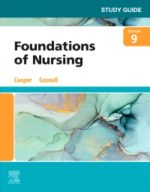
Study Guide for Foundations of Nursing, 9th Edition
KSh 7,280.00Reinforce your understanding of LPN/LVN nursing skills — and prepare for the NCLEX-PN® exam! Corresponding to the chapters in Foundations of Nursing, 9th Edition, this study guide provides a variety of exercises to help you review, practice, and apply nursing concepts and principles. Review questions make it easier to achieve the chapter objectives from the textbook, and critical thinking activities help you develop clinical judgment skills. Now with Next Generation NCLEX® (NGN)-style case studies and questions, this guide provides you with an effective study tool for the NGN exam.
Be the first to review “COMMUNICABLE DISEASES 4th edition”