
The book covers the important aspects of water, air and noise pollution. Using a multidisciplinary approach, it highlights the impact of environmental pollution in the world. It also suggests methods for controlling and scientific monitoring of pollution-causing agents. Also included are chapters on efficient guidelines and standards, radioactive waste, solid waste disposal and sewage treatment, oil pollution and role of insecticides. Pollution in tanneries, fertilizer industry, and pulp and paper industries is also covered. The last few chapters are devoted to environmental management, benefit-cost analysis and mathematical modelling for environmental pollution control.
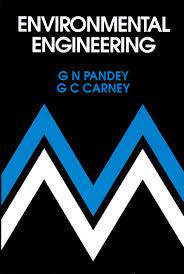
Environmental Engineering Paperback – 14 July 2017
KSh 7,500.00
The book covers the important aspects of water, air and noise pollution. Using a multidisciplinary approach, it highlights the impact of environmental pollution in the world. It also suggests methods for controlling and scientific monitoring of pollution-causing agents. Also included are chapters on efficient guidelines and standards, radioactive waste, solid waste disposal and sewage treatment, oil pollution and role of insecticides. Pollution in tanneries, fertilizer industry, and pulp and paper industries is also covered. The last few chapters are devoted to environmental management, benefit-cost analysis and mathematical modelling for environmental pollution control.
3 in stock
| Author | G N Pandey |
|---|
Customer Reviews
There are no reviews yet.
Related products
-

Environmental Biotechnology: Principles and Applications, Second Edition
KSh 22,960.00The classic environmental biotechnology textbook―fully updated for the latest advances
This thoroughly revised educational resource presents the biological principles that underlie modern microbiological treatment technologies. Written by two of the field’s foremost researchers, Environmental Biotechnology: Principles and Applications, Second Edition, clearly explains the new technologies that have evolved over the past 20 years, including direct anaerobic treatments, membrane-based processes, and granular processes. The first half of the book focuses on theory and tools; the second half offers practical applications that are clearly illustrated through real-world examples.
Coverage includes:
• Moving toward sustainability
• Basics of microbiology
• Biochemistry, metabolism, genetics, and information flow
• Microbial ecology
• Stoichiometry and energetics
• Microbial kinetics and products
• Biofilm kinetics
• Reactor characteristics and kinetics
• Methanogenesis
• Aerobic suspended-growth processes
• Aerobic biofilm processes
• Nitrogen transformation and recovery
• Phosphorus removal and recovery
• Biological treatment of drinking water -

Agricultural and Agribusiness Law An Introduction for Non-Lawyers
KSh 8,330.00This introductory textbook provides an overview of the concepts necessary for an understanding of agricultural and agribusiness law. The text will help students of land-based industries with little or no legal background to appreciate and identify issues that may require referral or consultation with legal counsel. This new edition is fully revised and updated, particularly addressing developments in taxation and trade, and includes a new chapter on criminal law, an area of increasing relevance to agriculture.
Each concise chapter addresses a different legal issue that those employed in agriculture and agribusiness may face, and both federal law and representative examples of state law are included. In addition to traditional topics such as contracts, property law, and estate planning, the book also covers more contemporary issues such as organic certification, animal law, genetically engineered crops, and food safety.
Agricultural law extends beyond those directly engaged in farming to those in agribusiness who provide services and inputs to farmers, buy farmers’ products, store or transport products, manufacture food products and serve as intermediaries between farmers and consumers. The book will, therefore, also serve as a reference and a guide for those employed in agribusiness and agriculture.
-

Future Hype: The Myths of Technology Change
KSh 1,595.00Future Hype surveys the past few hundred years to show that many of the technologies we now take for granted transformed society in far more dramatic ways than more recent developments so often touted as unparalleled and historic. In this thoughtful book, Bob Seidensticker exposes the hidden costs of technology—and helps both consumers and businesses take a shrewder position when the next “essential” innovation is trotted out.
-

Basic Electrical and Electronics Engineering
This book provides an overview of the basics of electrical and electronic engineering that are required at the undergraduate level. Efforts have been taken to keep the complexity level of the subject to bare minimum so that the students of non electrical/electronics can easily understand the basics. It offers an unparalleled exposure to the entire gamut of topics such as Electricity Fundamentals, Network Theory, Electro-magnetism, Electrical Machines, Transformers, Measuring Instruments, Power Systems, Semiconductor Devices, Digital Electronics and Integrated Circuits.
-
Handbook of Vegetable Science and Technology
KSh 10,200.00“Furnishes exhaustive, single-source coverage of the production and postharvest technology of more than 70 major and minor vegetables grown in tropical, subtropical, and temperate regions throughout the world. Provides comparative data for each vegetable presented. “
-

Elements of Enviromental Engineering-Dr K.N. Duggal
KSh 2,586.00The key features include: the important principles and practices of Sanitary Engineering, as they are understood and generally applicable in our country today, have been fully delineated so that it may be easy for the students preparing for various examinations; the treatment of the subject has been kept exhaustive, sufficiently simple without sacrificing the fundamentals involved; and, effort has been made to keep the information as much up-to-date and compact as possible, and with that view, some references have been made to the relevant Indian Standard Specifications, so that to the engineers in the profession, it may also prove to be of use. The book is broadly split up into four parts. Part I deals exclusively with the subject of “Water Supply”, Part II describes “Sewerage and Sewage Treatment”, Part III “Water Supply and Drainage of Buildings” and Part IV “Environmental Sanitation”, which includes only some of the more important topics of the day viz., Refuse Sanitation, Ventilation and Air-conditioning, Air Pollution, and Malaria, incidental to Engineering. A number of selective questions of the various Indian Universities and other examinations have been given towards the end of each chapter to serve as an exercise to the problems duly solved in the chapter. The last 2-3 decades have seen tremendous research and development in the fields of water treatment and sewage/wastewater treatment. New concepts like unit operations in water treatment and unit operation and processes, in particular biological processes, in sewage/wastewater treatment have been introduced. Besides topics like defluoridation, demineralization and wastewater reclamation have evoked considerable interest and attention. To reflect these changes, this book has been revised to make it updated, with the latest information on these topics. The readers will find the book more appropriate and useful to their needs.
-

Agricultural Sustainability by Elisa Gomez Gonzalez (Author)
KSh 21,000.00Agricultural Sustainability starts with an overview of agricultural sustainability and the factors influencing the agricultural sustainability. As agricultural sustainability is all about understanding ecosystem services and can be seen as a study of relation between organisms and their respective environment, this text has been written to cover all these aspects. Further, sustainability in poultry and aquaculture has been described to broaden the research and potential of agricultural sustainability in arid and semi-arid areas has also been discussed
-

Agricultural Law and Economics in Sub-Saharan Africa: Cases and Comments
KSh 17,400.00Agricultural Law in Sub-Saharan Africa: Cases and Comments introduces the subject of agricultural law and economics to researchers, practitioners, and students in common law countries in Sub-Saharan Africa, and presents information from the legal system in Botswana, Gambia, Ghana, Lesotho, Malawi, Nigeria, Sierra Leone, South Africa, Swaziland, Tanzania, Zambia, and Zimbabwe. The law and economics approach entails the use of quantitative methods in research. This is consistent with the expectations in an applied economics field such as agricultural economics.
Covering the general traditional law topics in contracts, torts, and property, the book goes further to introduce cutting-edge and region-relevant topics, including contracts with illiterate parties, contract farming, climate change, and transboundary water issues. The book is supported by an extensive list of reference materials, as well as study and enrichment exercises, to deepen readers’ understanding of the principles discussed in the book. It is a learning tool, first and foremost, and can be used as a stand-alone resource to teach the subject matter of agricultural law and economics to professionals new to the subject area as well as to students in law school, agricultural economics, economics, and inter-disciplinary classes.
- Offers research findings on such topics as food safety, climate change, transboundary natural resources, international sale of goods, patents, and trademarks to highlight the future sources of pressure on the agriculture industry
- Uses case-studies to provide real-world insights into the challenges and considerations of appropriate agricultural law development
- Challenges readers to carry out their own research in their areas of study, and to gain some understanding of the relationship between law, economics, and statistics
- Includes extensive resources, such as chapter summaries, study questions, and challenge questions at the end of each chapter to assist instructors and students in gaining full benefits from using the book
- Provides separate instructor and student study guides, a test bank, and test bank answers, in hardcopy and electronic formats
Be the first to review “Environmental Engineering Paperback – 14 July 2017”