
Through eight outstanding editions, Kanski’s Clinical Ophthalmology has been the classic specialty textbook, providing the perfect ophthalmology foundation for trainees and a valuable reference source for experienced practitioners. Building on the previous edition by Dr. Brad Bowling, Dr. John Salmon from Oxford University has comprehensively revised the textbook. The 9th Edition retains Dr. Kanski’s highly effective format of succinct text and visually dynamic presentation, providing authoritative, focused guidance on the diagnosis and management of ophthalmic disorders. Extremely well organized and comprehensive in scope, this visually stunning book reflects the latest advances in the field, facilitating quick comprehension to enhance learning, aid exam preparation and guide clinical practice. As a general ophthalmic textbook, this is the gold standard.
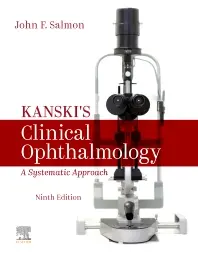
Kanski’s Clinical Ophthalmology A Systematic Approach
KSh 24,646.00
Through eight outstanding editions, Kanski’s Clinical Ophthalmology has been the classic specialty textbook, providing the perfect ophthalmology foundation for trainees and a valuable reference source for experienced practitioners. Building on the previous edition by Dr. Brad Bowling, Dr. John Salmon from Oxford University has comprehensively revised the textbook. The 9th Edition retains Dr. Kanski’s highly effective format of succinct text and visually dynamic presentation, providing authoritative, focused guidance on the diagnosis and management of ophthalmic disorders. Extremely well organized and comprehensive in scope, this visually stunning book reflects the latest advances in the field, facilitating quick comprehension to enhance learning, aid exam preparation and guide clinical practice. As a general ophthalmic textbook, this is the gold standard.
2 in stock
Customer Reviews
There are no reviews yet.
Related products
-
Modern Blood Banking & Transfusion Practices
KSh 12,460.00ASCP requirement.“To pass the ASCP and become a licensed medical lab tech, this text is the ultimate blood bank source for the required classes.”—Amazon Reviewer
Great resource for anyone in a Medical Technology or Medical Laboratory Science Program!I would highly recommend this book!”—Mary L., Amazon Reviewer
“Amazing legendary book in the field. Helpful for practicing Transfusion Medicine and Hematology.” —Zubair S., Amazon Reviewer
Join the generations of students who have embarked on successful careers with a firm foundation in the theory and practice of blood banking and transfusion practices. Denise Harmening’s classic text teaches you not only how to perform must-know tests and tasks, but to understand the scientific principles behind them.
You’ll begin with a review of the basic concepts of red blood cell and platelet preservation, genetics, immunology, and molecular biology. Then you’ll move to the hows and whys of clinical practice. And, you’ll be prepared for new advances in the field.
-
Kumar and Clark’s Clinical Medicine
KSh 17,470.00Now in its tenth edition, Kumar & Clark’s Clinical Medicine is fully updated and revised under a new team of editors.
Featuring new chapters covering:
o Diagnosis: the art of being a doctor – helping readers to develop a confident clinical method in interactions with patients
o Elderly medicine, frailty and multimorbidity
o Public health
o Surgery
o Evidence-based medicine
o Sepsis and the treatment of bacterial infection
o Haematological Oncology
o Venous thromboembolic disease
o Hypertension
o Men’s health
Enhanced clinical skills content has been added to most chapters – helping readers tailor history-taking and examination skills to specific specialty-based contexts.
Bonus online content – including self-assessment, common clinical and international cases, cardiovascular and respiratory audio material, clinical examination videos and bite-sized topic pages covering major conditions.
Heavily revised throughout with smaller chapters to ease navigation, added introductions and system overviews included for most chapters.Edited by Adam Feather, MBBS, FRCP, FAcadMEd; David Randall, MA, MRCP; and Mona Waterhouse, MA, MRCP. Contributors comprise consultants at the top of their fields, paired with younger doctors closer to the exam experience, to ensure authority and relevance. International Advisory Board, led by Professor Janaka de Silva and Professor Senaka Rajapakse, providing guidance for global coverage from across the world. Members of the International Advisory Board have contributed to the ebook with additional content to amplify areas of clinical importance in their parts of the world.Enhanced e-book accompanies the print book, for ease of transportation and use on the move.
Featuring new chapters covering:
o Diagnosis: the art of being a doctor – helping readers to develop a confident clinical method in interactions with patients
o Geriatric medicine, frailty and multimorbidity
o Public health
o Surgery
o Evidence-based medicine
o Sepsis
o Haematological Oncology
o Venous thromboembolic disease
o Hypertension
o Men’s health
o Obstetric medicine
Enhanced clinical skills content has been added to most chapters – helping readers tailor history-taking and examination skills to specific specialty-based contexts. -
Introduction to Epidemiology
KSh 4,820.00Recognized by Book Authority as one of the best Public Health books of all time, Introduction to Epidemiology is a comprehensive, reader-friendly introduction to this exciting field. Designed for students with minimal training in the biomedical sciences and statistics, this full-color text emphasizes the application of the basic principles of epidemiology according to person, place, and time factors in order to solve current, often unexpected, and serious public health problems.Students will learn how to identify and describe public health problems, formulate research hypotheses, select appropriate research study designs, manage and analyze epidemiologic data, interpret and apply results in preventing and controlling disease and health-related events. With real-world examples in the form of case studies and news files in each chapter, Introduction to Epidemiology is an accessible and effective approach to learning epidemiology.The Eighth Edition features:- Same organization as the prior edition allowing for easier transition- New or expanded coverage of the models of causation, methods of age adjustment, age-period cohort models, incubation and latency periods, and receiver operating characteristic (ROC) curves- Clearer connection between statistical inference and causal inference- New and updated practical examples and News Files help solidify concepts and show real-world application- Updated tables and figures throughout- Access to Navigate 2 online learning materials, including a comprehensive and interactive eBook, student practice activities and assessments, learning analytics reporting tools, and more- A built-in adaptive learning feature enables students to take self-assessments before or after reading a chapter. Based on their performance they can map out their own custom study plan that directs them to the areas of the text to review.
-
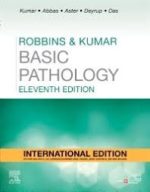
Robbins & Kumar Basic Pathology. International Edition, 11th Edition
KSh 9,500.00Readable, well-illustrated, and concise, Robbins and Kumar Basic Pathology, 11th Edition, offers today’s busy students a rich understanding of all essential pathology concepts from trusted names in the field. This updated edition thoroughly covers key pathologic processes and the time-honored tools of gross and microscopic analysis, while also retaining a strong emphasis on clinicopathologic correlations and the impact of molecular pathology on the practice of medicine. Outstanding artwork and schematic drawings, as well as a robust eBook experience with extensive additional features, make complex concepts easier to learn and retain.
Key Features-
- Includes fully updated clinical topics throughout.
-
- Features high-quality photomicrographs, gross photos, and radiologic images, as well as new artwork and over 150 new schematic diagrams that help summarize key or complex disease mechanisms.
-
- Contains a new Rapid Review section that uses bulleted summary boxes to deliver essential take-home messages and help you focus on the fundamentals.
-
- Includes tables of relevant laboratory tests for each chapter that link pathophysiology of disease and diagnostic testing.
- Highlights pathogenesis, morphology, and pathophysiologic content throughout.
- Features increased representation of diverse populations throughout the text, including clinical photographs of skin lesions in multiple skin types and a new section on the role of socially defined race in health disparities.
Author InformationEdited by Vinay Kumar, MBBS, MD, FRCPath, Professor and Chairman, Department of Pathology, University of Chicago, Pritzker School of Medicine, Chicago, IL, USA; Abul K. Abbas, MBBS, Emeritus Professor, Department of Pathology, University of California San Francisco, USA; Jon C. Aster, MD, PhD, Professor, Department of Pathology, Harvard Medical School; Brigham and Women’s Hospital, Boston, Massachusetts, USA and Andrea T Deyrup, M.D., Ph.D., Associate Professor Department of Pathology Duke University Medical Center -
-
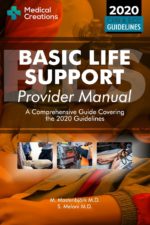
Basic Life Support Provider Manual – A Comprehensive Guide Covering the Latest Guidelines (Bls, ACLS and Pals)
Comprehensive Basic Life Support Provider Manual covering the latest BLS, ACLS, and PALS guidelines. Perfect for healthcare professionals and students preparing for certification.
Are you looking to get your BLS / CPR certification? This concise, and easy-to-understand manual has been created by doctors at Medical Creations and complies with the latest 2020 guidelines released by the American Heart Association (AHA). These guidelines are updated every five years. You will find questions at the end of each chapter so that you can test your knowledge and see if you remember everything. Most people pass the BLS course if they correctly answer the questions in this manual. The answers are located at the back of the book.
This book is designed for everyone aiming to undergo BLS / CPR training. It seeks to establish a sound understanding of the principles of BLS and the latest guidelines. All the protocols illustrated here are based on up-to-date evidence.
Basic Life Support (BLS) refers to a set of procedures that can be learned to prolong survival in life-threatening situations until more professional help is available. Any individual can become certified in basic life support protocols. However, these protocols are frequently updated based on the latest evidence available, and every individual who undergoes BLS certification may need to refresh their knowledge every two years.
Medical professionals usually have a sound understanding of basic life support protocols. However, even then, it is essential for them to frequently undergo certifications to update their knowledge regarding the latest evidence-based protocols. This handbook is designed for both medical professionals and non-healthcare individuals. It aims to establish a sound understanding of the mechanisms underlying basic life support.
Thanks to this book, you will:
- ..Have a clear understanding of the principles of BLS and the latest guidelines
- ..Be able to take the BLS course
- ..See if you remember everything thanks to the questions after each chapter
-
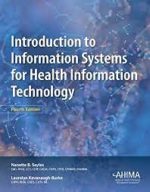
Introduction to Information Systems for Health Information Technology, Fourth Edition
This comprehensive textbook introduces students to the essential role of information systems in today’s healthcare environment. The Fourth Edition of Introduction to Information Systems for Health Information Technology provides a clear, accessible overview of healthcare IT systems, data management, and the critical importance of health information technology (HIT) in delivering safe, efficient, and high-quality patient care.
Aligned with current CAHIIM and AHIMA curriculum competencies, the book prepares students for careers in health information management (HIM) by exploring real-world applications of EHRs (electronic health records), interoperability, data governance, privacy and security, system implementation, and analytics.
Filled with up-to-date examples, key terms, review questions, and engaging visuals, this edition is ideal for HIT and HIM students preparing for certification and clinical practice in a technology-driven healthcare world.
-
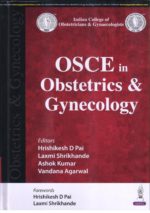
OSCE in Obstetrics and Gynecology
This textbook is in accord with the motto of FOGSI which is dissemination of updated knowledge and education in the ever-expanding science of Obstetrics and Gynecology. It is a unique bank of practically based OSCE questions and answers based on the latest clinical guidelines which contains elaborative information in a very reader-friendly colorful layout. This book has been primarily written for undergraduate and postgraduate students to guide them in their preparation for their professional examinations. However, it will be a very handy and informative bank of knowledge, especially on the practical and clinical aspects of obstetrics and gynecology for all practitioners as well.
- This is a one-of-a-kind textbook purely based on the format of OSCE, i.e., Objectively Structured Clinical Examination stations, covering the fields of Obstetrics as well as Gynecology exhaustively.
- Liberal use of pictures and illustrations will not only aid the students in their preparation but also make the process of reading enjoyable.
- An exhaustive collection of chapters ranging from the basics of Obstetrics and Gynecology to recent advances like Endoscopy in Gynecology, Reproductive Medicine, and Imaging in Obstetrics.
- Topics like Fetal Ultrasound in First and Second Trimester, Screening and Congenital Malformations have been extensively covered with the help of images and illustrations making the topics simple and easy to understand.
- Liberty has been taken to provide detailed answers of some topics as well as pertinent references for further reading.
-

Be the first to review “Kanski’s Clinical Ophthalmology A Systematic Approach”