
This is the scandalous story of how the Maasai people of Kenya lost the best part of their land to the British in the 1900s. Drawing upon unique oral testimony and extensive archival research, Hughes describes the intrigues surrounding two enforced moves and the 1913 lawsuit, while explaining why recent events have brought the story full circle.
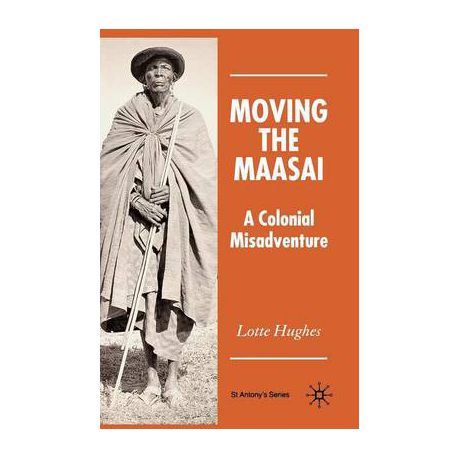
Moving the Maasai: A Colonial Misadventure (St Antony’s Series) 1st ed. 2006 Edition
KSh 15,260.00
1 in stock
| Author | L. Hughes |
|---|
Customer Reviews
There are no reviews yet.
Related products
-
Afro-European Trade in the Atlantic World The Western Slave Coast, c. 1550- c. 1885
KSh 14,560.00From 1550 to colonial partition in the mid-1880s, trade was key to Afro-European relations on the western Slave Coast (the coastal areas of modern Togo and parts of what are now Ghana and Benin). This book looks at the commercialrelations of two states which played a crucial role in the Atlantic slave trade as well as the trade in ivory and agricultural produce: Hula, known to European traders as Grand Popo (now in Benin) and Ge, known as Little Popo (nowin Togo). Situated between the Gold Coast to the west and the eastern Slave Coast to the east, this region was an important supplier of provisions for Europeans and the enslaved Africans they purchased. Also, due to its positionin the lagoon system, it facilitated communication along the coast between the trading companies’ headquarters on the western Gold Coast and their factories on the eastern Slave Coast, particularly at Ouidah, the Slave Coast’s major slave port. In the 19th century, when the trade at more established ports was disrupted by the men-of-war of the British anti-slave trade squadron, the western Slave Coast became a hot-spot of illegal slave trading.
Providing a detailed reconstruction of political and commercial developments in the western Slave coast, including the transition from the slave trade to legitimate commerce, this book also reveals the region’s position in the wider trans-Atlantic trade network and how cross-cultural partnerships were negotiated; the trade’s impact on African coastal “middlemen” communities; and the relative importance of local and global factors for the history of a region or community.Silke Strickrodt is Visiting Research Fellow at the Department of African Studies and Anthropology at the University of Birmingham. She is co-editor (with Robin Law and Suzanne Schwarz) of Commercial Agriculture, the Slave Trade and Slavery in Atlantic Africa (James Currey, 2013).
-

The Cry of the Go-Away Bird
KSh 1,200.00The Cry of the Go-Away Bird’ is the debut novel from Andrea Eames. It revolves around Elise, a white Zimbabwean girl living through her teens on the eve of the Mugabe-sponsored farm invasions at the beginning of this century. The author herself grew up in Zimbabwe before moving to New Zealand with her family at the age of seventeen and there is a strong sense of memoir and personal experience in the novel, which has both positive and negative effects on the narrative.
The main character is drawn very effectively. The natural anxieties felt when emerging into an adult world are uncannily accurate, and allow the reader to relate to Elise and her family as their experiences later become more extreme. However, sometimes the story is so personal that it verges on one-sided. There is more variety, and a more complex array of emotions and motivations among the white characters than the black ones. The black characters are unfathomable and often sinister. Perhaps this is how Elise really sees them, but the novel could have perhaps painted a more complex picture for the reader of the spectrum of attitudes surrounding these massive social upheavals.
Eames makes various attempts to describe the fragile nature of race relations in post-independence Zimbabwe. Often she succeeds admirably, as when Elise’s parents invite a black farm-worker and his wife over for dinner in an effort to make friends. The awkwardness felt by all is palpable and it is a fine piece of writing. Eames clearly has a talent for describing a society in microcosm. There are examples of Eames’ considerable powers of observation elsewhere in the book too. Of the ‘Bush War’ (or War of Independence) it is said, The war felt like a death in the family – someone whose name was never mentioned, who was cut out of photographs. Of Mugabe, Elise says, He was like a hated Headmaster, overbearing and incompetent, towards whom you felt a kind of loyalty. This metaphor demonstrates that Eames is certainly able to express complicated emotions in a clear and artful manner.
There are, however, times in the novel when the writing fails in this respect. Sentences such as We were Whites, and nothing else and The air between us was a different colour, are clumsy and blunt, and have a taste of bitterness that the story does not benefit from.
The action in the novel is heavily weighted towards the last half, when the actual farm invasions and killings of farmers are taking place. In these pages the book does become compelling. Eames successfully renders the panicked atmosphere of a rapidly crumbling way of life, and the events feel both real and shocking.
Overall, though well written, the novel is trying to tell too many stories in too many ways. Elise’s story is cut-off by the dramatic political events occurring, but those events appear as from nowhere and lack real context. The book is still worth reading for a glimpse into this interesting and unfamiliar world, but there may be better novels to come from Andrea Eames.
-
The Village of Waiting
KSh 995.00Now restored to print with a new Foreword by Philip Gourevitch and an Afterword by the author, The Village of Waiting is a frank, moving, and vivid account of contemporary life in West Africa. Stationed as a Peace Corps instructor in the village of Lavié (the name means “wait a little more”) in tiny and underdeveloped Togo, George Packer reveals his own schooling at the hands of an unforgettable array of townspeople―peasants, chiefs, charlatans, children, market women, cripples, crazies, and those who, having lost or given up much of their traditional identity and fastened their hopes on “development,” find themselves trapped between the familiar repetitions of rural life and the chafing monotony of waiting for change.
-

Violent Politics: A History of Insurgency, Terrorism, and Guerrilla War, from the American Revolution to Iraqer
KSh 1,500.00Guerrilla warfare is not just the tool of modern-day terrorists in the Middle East. Its roots stretch back to our very own revolution.
In Violent Politics, William R. Polk takes us on a concise, brilliant tour of insurgencies throughout history, beginning with America’s own struggle for independence. Continuing on, Polk explores the role of insurgency in other notable conflicts—including the Spanish guerrilla war against Napoleon, the Irish struggle for independence, the Algerian War of National Independence, and Vietnam—eventually landing at the ongoing campaigns in Afghanistan and Iraq, where the lessons of this history are needed more than ever.
-
Regionalization of African Higher Education -progress and prospects
KSh 6,720.00Regionalization of higher education in Africa is the least researched topic in the field of Social Science. In this regard, this book is a pioneer in terms of exploring both the historical and theoretical dynamics of regionalization processes within Africa. This book raises fundamental questions that focus on context and formation, operationalization and implications, and challenges and prospects of these regionalization processes. In doing so, it gives both the analytical contexts of the evolution of higher education regionalization and the current initiatives by the African Union. Dissertation. (Series: Contributions to African Research / Beitr�¤ge zur Afrikaforschung, Vol. 73) [Subject: African Studies, Higher Education]
-

Letters from Robben Island: A Selection of Ahmed Kathrada’s Prison Correspondence, 1964-1989 Paperback
KSh 1,295.00Late one night in July, 1963, a South African police unit surrounded the African National Congress headquarters in Rivonia and arrested a group of Movement leaders gathered inside. Eventually eight of them, including Nelson Mandela, who was already serving a sentence, Walter Sisulu, Dennis Goldberg, Govan Mbeki, Raymond Mhlaba, Elias Motsoledi, Andrew Mangeni, and Ahmed Kathrada, were convicted of sabotage and, on June 12, 1964, sentenced to life in prison. Soon, these men became widely known as the “Rivonia Trialists.” Despite their imprisonment, the Trialists played active roles in the struggle against South Africa’s racist regime. Instead of being forgotten, as apartheid officials had hoped, they became enduring symbols in a struggle against injustice and racism.
Kathrada and his colleagues were classified as high security prisoners, segregated from others and closely watched. Every activity was regulated and monitored. Among the many indignities visited upon them, the prisoners were prohibited from keeping copies of incoming and outgoing correspondence. Kathrada, or “Kathy” as he is known, successfully hid both.
Letters From Robben Island contains a selection of 86 of the more than 900 pieces of correspondence Ahmed Kathrada wrote during his 26 years on Robben Island and at Pollsmoor Prison. Some were smuggled out by friends; others were written in code to hide meaning and content from prison censors. These are among his most poignant, touching, and eloquent communications. They are testimonies to Kathrada, his colleagues, and to their commitment to obtaining human dignity and freedom for all South Africans. -
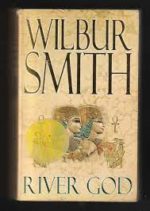
River God (The Egyptian Novels)
KSh 400.00Ancient Egypt. Land of the Pharaohs. A kingdom built on gold. A legend shattered by greed…. Now the Valley of Kings lies ravaged by war, drained of its lifeblood, as weak men inherit the cherished crown. For Tanus, the fair-haired young lion of a warrior, the gods have decreed that he will lead Egypt’s army in a bold attempt to reunite the Kingdom’s shattered halves. But Tanus will have to defy the same gods to attain the reward they have forbidden him, an object more prized than battle’s glory: possession of the Lady Lostris, a rare beauty with skin the color of oiled cedar – destined for the adoration of a nation, and the love of one extraordinary man.
KSh 650.00 -

Artisanal Fishers on the Kenyan Coast- Household Livelihoods and Marine Resource Management
KSh 1,200.00Overexploitation of natural resources is often associated with poverty among local populations. A multi-disciplinary team studied artisanal fishers along the Kenyan coast on the Indian Ocean. The main focus of the research was on income diversification of fishers, the pressure on marine resources and the relation between the two. Income diversification did not reduce the pressure on the marine environment. Rather, indications are that many part-time fishers are entering the profession. Moreover, fishers with alternative employment stayed in-shore and used damaging gear more often. Policies to stimulate employment opportunities for coastal communities cannot be expected to lessen the pressure on marine resources and need to be planned carefully in terms of industry location, labour requirements and degree of coastal pollution.
Be the first to review “Moving the Maasai: A Colonial Misadventure (St Antony’s Series) 1st ed. 2006 Edition”