
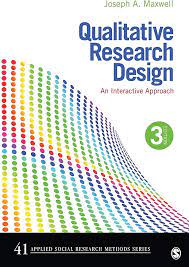
Qualitative Research Design: An Interactive Approach provides researchers and students with a user-friendly, step-by-step guide to planning qualitative research. It shows how the components of design interact with each other, and provides a strategy for creating coherent and workable relationships among these design components, highlighting key design issues. Written in an informal, jargon-free style, the new Third Edition incorporates examples and hands-on exercises.
Qualitative Research Design
KSh 7,700.00
Qualitative Research Design: An Interactive Approach provides researchers and students with a user-friendly, step-by-step guide to planning qualitative research. It shows how the components of design interact with each other, and provides a strategy for creating coherent and workable relationships among these design components, highlighting key design issues. Written in an informal, jargon-free style, the new Third Edition incorporates examples and hands-on exercises.
| Author | Joseph A. Maxwell – George Mason University, VA |
|---|
Customer Reviews
There are no reviews yet.
Related products
-

Americanah: Chimamanda Ngozi Adichie
KSh 1,695.00SHORTLISTED FOR THE BAILEY S WOMEN S PRIZE FOR FICTION 2014.
From the award-winning author of Half of a Yellow Sun, a powerful story of love, race and identity.
As teenagers in Lagos, Ifemelu and Obinze fall in love. Their Nigeria is under military dictatorship, and people are fleeing the country if they can. The self-assured Ifemelu departs for America. There she suffers defeats and triumphs, finds and loses relationships, all the while feeling the weight of something she never thought of back home: race. Obinze had hoped to join her, but post-9/11 America will not let him in, and he plunges into a dangerous, undocumented life in London.
Thirteen years later, Obinze is a wealthy man in a newly democratic Nigeria, while Ifemelu has achieved success as a blogger. But after so long apart and so many changes, will they find the courage to meet again, face to face?
Fearless, gripping, spanning three continents and numerous lives, the National Book Critics Circle Award-winning Americanah is a richly told story of love and expectation set in today s globalized world.
-
Peace Kills – Softcover800
KSh 500.00In this latest collection of adventures, P. J. O’Rourke casts his mordant eye on America’s recent foreign policy forays. He first travels to Kosovo where he meets KLA veterans, Albanian refugees and peacekeepers, and confronts the paradox of ‘the war that war-haters love to love’. He visits Egypt, Israel and Kuwait, where he witnesses citizens enjoying their newfound freedoms – namely, to shop, to eat and to sit around a lot. Following 11 September, O’Rourke examines the far-reaching changes in the US, from the absurd hassles of airport security to the dangers of anthrax. In Iraq, he witnesses both the beginning and the end of Operation Iraqi Freedom and takes a tour of a presidential palace, concluding that the war was justified for at least one reason: criminal interior decorating.
Peace Kills is an eye-opening look at a world much changed since O’Rourke wrote his bestselling Give War A Chance – a book in which he presciently declared that the most troubling aspect of war is sometimes peace itself.
-
21 Lessons for The 21St Century Paperback
KSh 1,695.00The future is here. Learn to live in it.
In twenty-one bite-sized lessons, Yuval Noah Harari explores what it means to be human in an age of bewilderment.
How can we protect ourselves from nuclear war, ecological cataclysms and technological disruptions? What can we do about the epidemic of fake news or the threat of terrorism? What should we teach our children?
Yuval Noah Harari takes us on a thrilling journey through today’s most urgent issues. The golden thread running through his exhilarating new book is the challenge of maintaining our collective and individual focus in the face of constant and disorienting change. Are we still capable of understanding the world we have created?
‘Fascinating… compelling… [Harari] has teed up a crucial global conversation about how to take on the problems of the 21st century’ Bill Gates, New York Times
‘Truly mind-expanding… Ultra-topical’ Guardian
‘21 Lessons is, simply put, a crucial book’ Adam Kay
-
Information Governance and Assurance: Reducing risk, promoting policy
KSh 10,780.00This comprehensive textbook discusses the legal, organizational and ethical aspects of information governance and assurance and security and their relevance to all aspects of information work.
Information governance describes the activities and practices which have developed to control the use of information, including, but not limited to, practices mandated by law. In a world in which information is increasingly seen as a top-level asset, the safeguarding and management of information is of concern to everyone. From the researcher who is responsible for ethical practices in the gathering, analysis, and storage of data, to the reference librarian who must deliver unbiased information; from the records manager who must respond to information requests, to the administrator handling personnel files, this book with equip practitioners and students alike to implement good information governance practice in real-world situations.
Key topics covered include:
Information as an asset
The laws and regulations
Data quality management
Dealing with threats
Security, risk management and business continuity
Frameworks, policies, ethics and how it all fits together.
Readership: Fully supported by examples, discussion points and practical exercises, this is essential reading for everyone who needs to understand, implement and support information assurance policies and information governance structures. It will be particularly valuable for LIS students taking information management and information governance courses, and information professionals with an advisory or gatekeeping role in information governance within an organization.
-
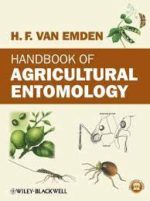
Handbook of Agricultural Entomology
KSh 16,380.00Handbook of Agricultural Entomology by Helmut van Emden is a landmark publication for students and practitioners of entomology applied to agriculture and horticulture. It can be used as a reference and as a general textbook.
The book opens with a general introduction to entomology and includes coverage of the major insects (and mites) that cause harm to crops, livestock and humans. The important beneficial species are also included. Organisms are described in a classification of insect Orders and Families. The emphasis is on morphological characters of major taxonomic divisions, “spot characters” for the recognition of Families, and the life histories, damage symptoms and economic importance of the various pest species.
The book is beautifully illustrated in full colour with more than 400 figures showing both the organisms and the damage caused to plants with diagnostic characters indicated by arrows. Coverage is world-wide and includes much material stemming from the vast personal experience of the author.
-
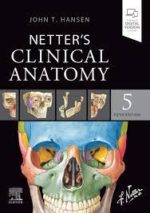
Netter’s Clinical Anatomy, 5th Edition
KSh 10,050.00Offering a targeted, concise approach to clinical anatomy, Netter’s Clinical Anatomy, 5th Edition, is a portable, easy-to-read text that bridges normal anatomy to common clinical conditions. It features nearly 600 superb illustrations by Drs. Frank H. Netter and Carlos Machado that provide essential descriptions of anatomy, embryology, and pathology to help you understand their clinical relevance. Authored by John Hansen, PhD, an Honored Member of the American Association of Clinical Anatomists, this visually stunning text covers and reviews the sizable area of human anatomy and pathology in a quick, easy-to-grasp format.
-
-

Security Studies
KSh 5,740.00Security Studies: An Introduction, 3rd edition, is the most comprehensive textbook available on the subject, providing students with an essential grounding in the debates, frameworks, and issues on the contemporary security agenda.
This new edition has been comprehensively revised and updated, with new chapters added on poststructuralism, postcolonialism, securitization, peace and violence, development, women, peace and security, cybersecurity, and outer space.
Divided into four parts, the text provides students with a detailed, accessible overview of the major theoretical approaches, key themes, and most significant issues within security studies.
- Part 1 explores the main theoretical approaches from both traditional and critical standpoints
- Part 2 explains the central concepts underpinning contemporary debates
- Part 3 presents an overview of the institutional security architecture
- Part 4 examines some of the key contemporary challenges to global security
Collecting these related strands into a single textbook creates a valuable teaching tool and a comprehensive, accessible learning resource for undergraduates and MA students.
Be the first to review “Qualitative Research Design”