
Reinforce your understanding of dental assisting concepts and practice essential skills! With chapters corresponding to the chapters in Essentials of Dental Assisting, 7th Edition, this student workbook provides a variety of exercises and activities to help you master the role and responsibilities of the dental assistant. Learning activities include review questions, competency sheets, and handy flashcards, each applying your knowledge to preclinical and clinical procedures. It’s an ideal study tool to use in dental assisting courses and to prepare for national board and state certification exams!

Student Workbook for Essentials of Dental Assisting, 7th Edition
KSh 7,685.00
Reinforce your understanding of dental assisting concepts and practice essential skills! With chapters corresponding to the chapters in Essentials of Dental Assisting, 7th Edition, this student workbook provides a variety of exercises and activities to help you master the role and responsibilities of the dental assistant. Learning activities include review questions, competency sheets, and handy flashcards, each applying your knowledge to preclinical and clinical procedures. It’s an ideal study tool to use in dental assisting courses and to prepare for national board and state certification exams!
2 in stock
Customer Reviews
There are no reviews yet.
Related products
-

Myles Textbook for Midwives, International Edition, 17th Edition
KSh 5,642.00Written by midwives for midwives, Myles Textbook for Midwives has been the seminal textbook of midwifery for over 60 years. It offers comprehensive coverage of topics fundamental to 21st midwifery practice. Co-edited for the second time, by internationally renowned midwife educationalists, Professor Jayne E Marshall and Maureen D Raynor from the United Kingdom with a team of contributors from across the midwifery community it retains its clear, accessible writing style. Most chapters provide useful case studies, websites of key organisations and charities for individuals to access further information. Reflective questions at the end of each chapter as well as annotated further reading aid reflective learning and stimulate discussions relating to continuing professional development.
Key Features-
- The book covers key frameworks that govern midwifery practice, exploring ethical and legal frameworks that are essential to every accountable, autonomous, professional midwife.
-
- Includes employer-led models of supervision, vital elements of leadership and clinical governance that supports the provision of high quality maternity services and standards of midwifery practice.
-
- The concept of resilience is introduced for the reader to contemplate their personal contribution in creating an environment that is conducive to protecting the wellbeing of themselves and colleagues within the workplace.
-
- The text covers the UN 2030 Agenda for Sustainable Development, highlighting the importance of midwives as global citizens with common goals, and together they form a strong global community prepared to challenge social inequalities and take action to help end extreme poverty.
-
- Covers designing and implementing high quality midwifery care using evidence, policy and models of care. Highlights why a holistic and evidence-informed approach is necessary to achieve effective care for all. Working examples will help the reader to think critically about their own practice.
-
- For this edition several new chapters are introduced covering concealed pregnancy, fear of childbirth (tocophobia), care of the acutely unwell woman and end of life issues including rights of the fetus/neonate and ethical considerations.
Author InformationEdited by Jayne E. Marshall, FRCM, PFHEA, PhD, MA, PGCEA, ADM, RM, RN, Foundation Professor of Midwifery and NMC Lead Midwife for Education, School of Allied Health Professions, College of Life Sciences, George Davies Centre, University of Leicester, UK and Maureen D. Raynor, MA PGCEA ADM RMN RN RM, Senior Lecturer (Midwifery), De Montfort University, Faculty of Health and Life Sciences, School of Nursing and Midwifery, Leicester, UK -
-
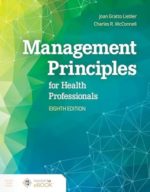
Management Principles for Health Professionals
KSh 7,420.00Management Principles for Health Professionals is a practical guide for new or future practicing healthcare managers. The customary activities of the manager―planning, organizing, decision making, staffing, motivating, and budgeting―are succinctly defined, explained, and presented with detailed examples drawn from a variety of health care settings. Students will learn proven management concepts, techniques, models, and tools for managing individuals or teams with skill and ease.The Eighth Edition continues to present foundational principles of management in the context of contemporary health care. With timely coverage of such topics as medical cost sharing; use of robots; ER by appointment; increased use of observation units; renewed use of flextime staffing and scheduling; use of social media on the job, and more, this thoroughly updated text addresses the latest trends and issues that today’s health care manager is likely to encounter.Key Features- Presents 2 new tools ―The Manager’s Wheel Book and the Management Reference Portfolio ― to help new managers better understand their role and responsibilities and to aid existing managers in understanding their organization in detail- Covers managing care in a wide variety of health care settings (urgent care centers, specialty clinics, home care, etc.) outside of the traditional hospital setting.- Addresses technology and its impact, including eVisits/telemedicine, implementation of electronic health records, connectivity and the expectation that workers will respond during off hours via email and instant messaging, etc. – Offers expanded coverage on the importance and impact of corporate culture, the values of transparency and accountability, leadership style, and competitiveness.- Includes detailed examples of reports, plans, directives, union contracts, and more.
-
The Brain That Changes Itself
KSh 1,095.00An astonishing new science called neuroplasticity is overthrowing the centuries-old notion that the human brain is immutable. Psychiatrist and psychoanalyst Norman Doidge, travelled around the US to meet both the brilliant scientists championing neuroplasticity and the people whose lives they’ve transformed – people whose mental limitations or brain damage were seen as unalterable. We see a woman born with half a brain that rewired itself to work as a whole, blind people who learn to see, learning disorders cured, IQs raised, aging brains rejuvenated, stroke patients learning to speak, children with cerebral palsy learning to move with more grace, depression and anxiety disorders successfully treated, and lifelong character traits changed. Using these marvellous stories to probe mysteries of the body, emotion, love, sex, culture, and education, Dr. Doidge has written an immensely moving, inspiring book that will permanently alter the way we look at our brains, human nature, and human potential.
-
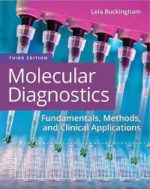
Molecular diagnostics: Fundamentals, Methods, and Clinical Applications
KSh 8,680.00Molecular diagnostics continues to grow in importance in the clinical laboratory. This respected text will prepare your students with a grounding in the fundamental principles of molecular biology. current methods, and their clinical applications.
With a focus on the application of molecular concepts to diagnostic purposes, the text explains and illustrate the use and interpretation of molecular-based assays in patient care. Now with an expanded discussion of nucleic acid sequencing, with added emphasis on next generation sequencing (NGS), and updated coverage of proteomics and mass spectrometry applications, your students will have the most current information available today.
-

A Complete Hospital Manual of Instruments and Procedures Paperback
KSh 8,400.00Infection Control, Sterilization and Care of Surgical Instruments Electrical Instruments―Laser, Cryoprobes, Ultrasonic Equipments The OR Complex, Its Management and Operation Table Anesthesia Equipment and Anesthetics Ligature and Suture Materials Operating Microscopes Endoscopy General Surgical Instruments General Surgical Sets and Procedures Gynecological and Obstetric Sets and Procedures Urologic Sets and Procedures Endocrine Surgery Procedures Orthopedic Instruments Sets and Procedures Ophthalmic Instruments and Procedures Dental Instruments and Procedures Ear, Nose & Throat Instruments and Procedures Neurosurgical Instruments and Procedures Plastic Surgery Instruments and Procedures Thoracic Instruments and Procedures Cardiovascular Instruments and Procedures Pediatric Surgery Procedures and Instruments Imaging Procedures and Equipment Plaster of Paris (POP) Technique New Emerging Techniques Appendices I to VI
-

Wong’s Nursing Care of Infants and Children 11th Edition
KSh 9,660.00Wong’s Nursing Care of Infants and Children, 11th Edition takes a unique, easy-to-follow developmental approach to describe the care of children at each age and stage of development. This longtime bestseller provides an evidence-based, clinical perspective that shows how the quality of nursing care can impact quality patient outcomes. Childhood diseases and disorders are organized by age groups and body systems and explained through the nursing process framework. This edition features completely updated and reorganized chapters that present content in a clear, easy-to-understand way. New Quality Indicator boxes paint a bigger picture of hospitals and how they look at quality and safety.
- A focus on family-centered care emphasizes the role and influence of the family in health and illness with a separate chapter and Family-Centered Care boxes.
- Emergency Treatment boxes serve as a quick reference in critical situations.
- Pathophysiology Reviews explain complicated disease processes with illustrated summary boxes.
- Quality Patient Outcomes are discussed for major childhood diseases and disorders, showing how nursing care directly impacts patient outcomes.
- Nursing Tips include helpful hints and practical, clinical information.
- Critical Thinking Case Studies help you test and develop your own analytical skills.
- Cultural Considerations provide cultural tips from clinical experts.
- Nursing Care Plans provide models for planning patient care, with rationales explaining why specific nursing interventions have been chosen, and include nursing diagnoses, patient/family goals, nursing interventions/rationales, expected outcomes, and NIC and NOC guidelines.
- Nursing Care Guidelines offer clear, step-by-step, detailed instructions on performing specific skills or procedures.
- Translating Evidence into Practice and Applying Evidence to Practice boxes help you apply research to support, guide, and improve the outcomes of nursing care.
- Atraumatic Care boxes contain techniques for care that minimize pain, discomfort, or stress, and provide guidance for performing procedures in a caring manner.
- Community and Home Health Considerations boxes focus on wellness information and illness-related topics.
- Drug Alerts highlight important drug-related information for safe, appropriate care.
- Nursing Alerts provides critical information that must be considered in providing care.
- Research Focus boxes emphasize research with concise reviews of important evidence.
- Nursing Alerts provides critical information that must be considered in providing care.
-

Introduction to Epidemiology
KSh 4,820.00Recognized by Book Authority as one of the best Public Health books of all time, Introduction to Epidemiology is a comprehensive, reader-friendly introduction to this exciting field. Designed for students with minimal training in the biomedical sciences and statistics, this full-color text emphasizes the application of the basic principles of epidemiology according to person, place, and time factors in order to solve current, often unexpected, and serious public health problems.Students will learn how to identify and describe public health problems, formulate research hypotheses, select appropriate research study designs, manage and analyze epidemiologic data, interpret and apply results in preventing and controlling disease and health-related events. With real-world examples in the form of case studies and news files in each chapter, Introduction to Epidemiology is an accessible and effective approach to learning epidemiology.The Eighth Edition features:- Same organization as the prior edition allowing for easier transition- New or expanded coverage of the models of causation, methods of age adjustment, age-period cohort models, incubation and latency periods, and receiver operating characteristic (ROC) curves- Clearer connection between statistical inference and causal inference- New and updated practical examples and News Files help solidify concepts and show real-world application- Updated tables and figures throughout- Access to Navigate 2 online learning materials, including a comprehensive and interactive eBook, student practice activities and assessments, learning analytics reporting tools, and more- A built-in adaptive learning feature enables students to take self-assessments before or after reading a chapter. Based on their performance they can map out their own custom study plan that directs them to the areas of the text to review.
-
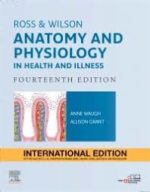
Ross and Wilson;Anatomy and Physiology in Health and Illness. International Edition, 14th Edition
KSh 8,000.00Now in its fourteenth edition, this best-selling textbook has been honed over many years to provide a clear, straightforward introduction to the human body for students of nursing, allied health or biomedical and paramedical science.
The book covers the core essentials of anatomy and physiology, including basic pathology and pathophysiology of important diseases and disorders. This new edition presents additional illustrations to enhance understanding of key concepts, including pathophysiology and diagnostics. Included for the first time is an introduction to surface anatomy, while other updating reflects current scientific knowledge and developments, including coronavirus. Enhanced learning features and an extensive online resource help you grasp all the important areas.
Like millions of readers before you, you will treasure Ross & Wilson as a go-to resource that you will refer to time and again to support this critical aspect of your healthcare education.
Key Features-
- Clear and easy to read – suitable for students new to the area and anyone whose first language is not English
-
- Hundreds of stunning illustrations and images to make learning easy
-
- Helpful learning features such as Learning Outcomes boxes, colour coding and orientation icons to facilitate navigation
-
- Definitions of common prefixes, suffixes and roots, examples, glossary and an appendix of normal biological values
-
- Self-assessment activities in each chapter, including ‘spot check’ questions for each section and case studies with answers to develop understanding of key principles
- Accompanying website with animations, videos, audio-glossary and other self-assessment material
Evolve Study Resources
Online content offered with Ross & Wilson Anatomy and Physiology in Health and Illness 14th edition includes:
-
- New for this edition – a set of expert-narrated 3D videos summarizing key topics in the book, powered by Complete Anatomy: the world’s most advanced 3D anatomy platform
-
- Over 120 animations clarifying underlying principles and make learning fun
-
- More than 1700 audio glossary entries
-
- Body Spectrum © online colouring and self-test software
- Self-assessment questions to help students test their knowledge
Author InformationBy Anne Waugh, MSc CertEd SRN RNT FHEA, School of Acute and Continuing care Nursing, Napier University, Edinburgh, UK and Allison Grant, BSc PhD RGN, Department of Biological and Biomedical Sciences, Glasgow Caledonian University, Glasgow, UK -
Be the first to review “Student Workbook for Essentials of Dental Assisting, 7th Edition”