
This state-of-the-art book reviews key issues and methods in medical image perception research through associated techniques, illustrations and examples. Written by key figures in the field, the book covers a range of topics including the history of medical image perception research, the basics of vision and cognition, and dedicated application areas, especially those concerned with the interface between the clinician and the display of medical image data. It summarizes many of the basic techniques used to conduct and analyze medical image perception and observer performance research, allowing readers to understand basic research techniques so they can adopt them for use in their own studies. Written for both newcomers to the field and experienced researchers, this book provides a broad overview of medical image perception, and will serve as a reference volume for years to come.
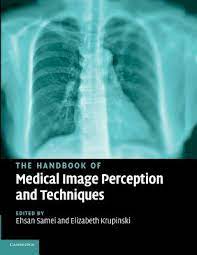
The Handbook of Medical Image Perception and Technique
KSh 11,200.00
This state-of-the-art book reviews key issues and methods in medical image perception research through associated techniques, illustrations and examples. Written by key figures in the field, the book covers a range of topics including the history of medical image perception research, the basics of vision and cognition, and dedicated application areas, especially those concerned with the interface between the clinician and the display of medical image data. It summarizes many of the basic techniques used to conduct and analyze medical image perception and observer performance research, allowing readers to understand basic research techniques so they can adopt them for use in their own studies. Written for both newcomers to the field and experienced researchers, this book provides a broad overview of medical image perception, and will serve as a reference volume for years to come.
1 in stock
| Author | Ehsan Samei (Editor), Elizabeth Krupinski |
|---|
Customer Reviews
There are no reviews yet.
Related products
-

Introduction to Epidemiology
KSh 4,820.00Recognized by Book Authority as one of the best Public Health books of all time, Introduction to Epidemiology is a comprehensive, reader-friendly introduction to this exciting field. Designed for students with minimal training in the biomedical sciences and statistics, this full-color text emphasizes the application of the basic principles of epidemiology according to person, place, and time factors in order to solve current, often unexpected, and serious public health problems.Students will learn how to identify and describe public health problems, formulate research hypotheses, select appropriate research study designs, manage and analyze epidemiologic data, interpret and apply results in preventing and controlling disease and health-related events. With real-world examples in the form of case studies and news files in each chapter, Introduction to Epidemiology is an accessible and effective approach to learning epidemiology.The Eighth Edition features:- Same organization as the prior edition allowing for easier transition- New or expanded coverage of the models of causation, methods of age adjustment, age-period cohort models, incubation and latency periods, and receiver operating characteristic (ROC) curves- Clearer connection between statistical inference and causal inference- New and updated practical examples and News Files help solidify concepts and show real-world application- Updated tables and figures throughout- Access to Navigate 2 online learning materials, including a comprehensive and interactive eBook, student practice activities and assessments, learning analytics reporting tools, and more- A built-in adaptive learning feature enables students to take self-assessments before or after reading a chapter. Based on their performance they can map out their own custom study plan that directs them to the areas of the text to review.
-
Contact Lens Practice
KSh 29,400.00In this thoroughly revised and updated third edition of Contact Lens Practice, award-winning author, researcher and lecturer, Professor Nathan Efron, provides a comprehensive, evidence-based overview of the scientific foundation and clinical applications of contact lens fitting. The text has been refreshed by the inclusion of ten new authors – a mixture of scientists and clinicians, all of whom are at the cutting edge of their specialty. The chapters are highly illustrated in full colour and subject matter is presented in a clear and logical format to allow the reader to quickly hone in the desired information.
-
Integrative Human Biochemistry: A Textbook for Medical Biochemistry
KSh 13,750.00This book covers in detail the mechanisms for how energy is managed in the human body. The basic principles that elucidate the reactivity and physical interactions of matter are addressed and quantified with simple approaches. Three-dimensional representations of molecules are presented throughout the book so molecules can be viewed as unique entities in their shape and function.
The book is focused on the molecular mechanisms of cellular processes in the context of human physiological situations such as fasting, feeding and physical exercise, in which metabolic regulation is highlighted. Furthermore the book uses key historical experiments that opened up new concepts in Biochemistry to further illustrate how the human body functions at molecular level, helping students to appreciate how scientific knowledge emerges.
This book also:
- Elucidates the foundations of the molecular events of life
Uses key historical experiments that opened up new concepts in Biochemistry to further illustrate how the human body functions at molecular level, helping students to appreciate how scientific knowledge emerges
- Provides realistic representations of molecules throughout the book
Advance Praise for Integrative Human Biochemistry
“This textbook provides a modern and integrative perspective of human biochemistry and will be a faithful companion to health science students following curricula in which this discipline is addressed. This textbook will be a most useful tool for the teaching community.”
- Elucidates the foundations of the molecular events of life
-

Davidson’s Principles and Practice of Medicine, 24th Edition(paperback)
KSh 10,640.00Well over two million medical students, doctors and other health professionals around the globe have owned a copy of Davidson’s Principles and Practice of Medicine since it was first published over 70 years ago. Now in its 24th Edition, this thoroughly updated textbook describes the pathophysiology and clinical features of the most frequently encountered conditions in the major specialties of adult medicine, and explains how to recognise, investigate, diagnose and manage them. Taking its origins from Sir Stanley Davidson’s much-admired lecture notes, Davidson’s has endured because it keeps pace with how modern medicine is taught and provides a wealth of trusted information in an easy-to-read, concise and beautifully illustrated format.
Key features:
-
- Part 1 ‘Fundamentals of Medicine’ – provides an account of the principles of genetics, immunology, infectious diseases, population health, oncology and pain management, along with a discussion of the core principles behind clinical decision-making and good prescribing.
-
- Part 2 ‘Emergency and Critical Care Medicine’ – covers medical emergencies in poisoning, envenomation and medicine in austere environments, as well as common presentations in acute medicine and the recognition and management of the critically ill.
-
- Part 3 ‘Clinical Medicine’– covers the major medical specialties, each thoroughly revised and brought fully up to date. A new section on COVID-19 has been added and the impact of this infection is described throughout the book.
-
- Clinical Examination overviews – extended and updated to summarise the main elements for each system.
-
- Presenting Problems sections – provide a clear pathway for the assessment of and approach to the most common complaints in each specialty.
-
- Practice Point summaries – detail the practical skills that medical students and junior doctors must acquire.
-
- Emergency boxes – emphasise the core knowledge needed to manage acutely ill patients.
-
- In Old Age, In Pregnancy and In Adolescence boxes – highlight differences in the practice of medicine in these patient groups, and illustrate the interfaces between medical, obstetric and paediatric services.
-
- The text is extensively illustrated – with over 1000 diagrams, clinical photographs, and radiology and pathology images.
- The global perspective is enhanced by an International Advisory Board of experts from 11 countries and by leading authors from around the world.
-
-
Guyton and Hall Textbook of Medical Physiology, International Edition, 14th Edition
KSh 13,300.00Known for its clear presentation style, single-author voice, and focus on content most relevant to clinical and pre-clinical students, Guyton and Hall Textbook of Medical Physiology, 14th Edition, employs a distinctive format to ensure maximum learning and retention of complex concepts. A larger font size emphasizes core information, while supporting information, including clinical examples, are detailed in smaller font and highlighted in pale blue – making it easy to quickly skim the essential text or pursue more in-depth study. This two-tone approach, along with other outstanding features, makes this bestselling text a favorite of students worldwide.Key Features-
- Offers a clinically oriented perspective written with the clinical and preclinical student in mind, bridging basic physiology with pathophysiology.
- Focuses on core material and how the body maintains homeostasis to remain healthy, emphasizing the important principles that will aid in later clinical decision making.
- Presents information in short chapters using a concise, readable voice that facilitates learning and retention.
- Contains more than 1,200 full-color drawings and diagrams – all carefully crafted to make physiology easier to understand.
- Features expanded clinical coverage including obesity, metabolic and cardiovascular disorders, Alzheimer’s disease, and other degenerative diseases.
- Includes online access to interactive figures, new audio of heart sounds, animations, self-assessment questions, and more.
- Enhanced eBook version included with purchase. Your enhanced eBook allows you to access all of the text, figures, and references from the book on a variety of devices.
-
-
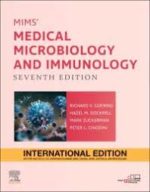
Mims’ Medical Microbiology and Immunology, International Edition, 7th Edition
KSh 5,642.00MIMS’ Medical Microbiology and Immunology is loved internationally for its thorough yet easy-to-follow coverage of microbiology, infectious diseases, and immunology as a dynamic interplay between microbes and host. Covering the fundamentals of these closely linked disciplines, MIMS’ takes a systems approach to elaborate on epidemiology, clinical presentation, pathogenesis, and diagnostic approaches, as well as treatment and infection control considerations, supplemented by case-based examples. Complex scientific and clinical concepts are explained clearly and simply with the help of illustrations and a range of accompanying online content. Students will come away with a deep understanding of topics and processes, and will return to this book for reference time and again.Key Features- Clear writing and easy-to-understand explanations – perfect for students learning to grasp the fundamentals of both microbiology and immunology
- User-friendly format with colour coding, key concept boxes, and dynamic illustrations for easy navigation
- Organised by body system – goes beyond the ‘bug parade’ to help you understand clinical context
Author InformationBy Richard Goering, BA MSc PhD, Professor and Chair, Department of Medical Microbiology and Immunology, Creighton University School of Medicine, Omaha, Nebraska.; Hazel M. Dockrell, BA (Mod) PhD, Professor of Immunology, Faculty of Infectious and Tropical Diseases, London School of Hygiene and Tropical Medicine, London, UK; Mark Zuckerman, BSc(Hons), MBBS, MRCP, MSc, FRCPath, Consultant Virologist and Honorary Senior Lecturer, South London Specialist Virology Centre, King’s College Hospital NHS Foundation Trust, King’s College London School of Medicine, London, UK; Peter L. Chiodini, BSc, MBBS, PhD, FRCP, FRCPath, FFTM, RCPS(Glas), Consultant Parasitologist, Hospital for Tropical Diseases, London and Honorary Professor, London School of Hygiene and Tropical Medicine, London, UK -

Kumar and Clark’s Clinical Medicine, 10th Edition
KSh 13,440.00Now in its tenth edition, Kumar & Clark’s Clinical Medicine is fully updated and revised under a new team of editors.
Featuring new chapters covering:
o Diagnosis: the art of being a doctor – helping readers to develop a confident clinical method in interactions with patients
o Elderly medicine, frailty and multimorbidity
o Public health
o Surgery
o Evidence-based medicine
o Sepsis and the treatment of bacterial infection
o Haematological Oncology
o Venous thromboembolic disease
o Hypertension
o Men’s health
Enhanced clinical skills content has been added to most chapters – helping readers tailor history-taking and examination skills to specific specialty-based contexts.
Bonus online content – including self-assessment, common clinical and international cases, cardiovascular and respiratory audio material, clinical examination videos and bite-sized topic pages covering major conditions.
Heavily revised throughout with smaller chapters to ease navigation, added introductions and system overviews included for most chapters. -
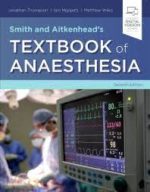
Smith and Aitkenhead’s Textbook of Anaesthesia, 7th Edition
KSh 18,612.00This highly successful textbook is internationally renowned as a core text for trainee anaesthetists and is essential reading for candidates for the Fellowship of Royal College of Anaesthetists and similar examinations. The previous 6th edition was awarded First Prize at the BMA Medical Book awards.
The book provides full coverage of the sciences underpinning practice in anaesthesia, critical care and pain management together with details of clinical anaesthesia and perioperative care. In combining these aspects, a generation of anaesthetists have found the textbook invaluable during the first few years of training as well as when preparing for the FRCA and similar professional examinations.
The goal for this Seventh Edition has remained to equip the reader with the basic knowledge and practical considerations required to administer anaesthesia and perioperative care for a whole range of surgical conditions in patients with all common medical comorbidities. Reflecting the expanding role of anaesthesia beyond the operating theatre it also includes essential material related to safety and quality assurance, consent, resuscitation, intensive care medicine, pre-hospital care and chronic pain management.
Be the first to review “The Handbook of Medical Image Perception and Technique”