
This manual covers the full range of communicable diseases in the African region: skin infections, malaria and other vector-borne diseases.
communicable diseases
KSh 3,000.00
This manual covers the full range of communicable diseases in the African region: skin infections, malaria and other vector-borne diseases.
5 in stock
Customer Reviews
There are no reviews yet.
Related products
-
A Complete Hospital Manual of Instruments and Procedures Paperback
KSh 8,400.00Infection Control, Sterilization and Care of Surgical Instruments Electrical Instruments―Laser, Cryoprobes, Ultrasonic Equipments The OR Complex, Its Management and Operation Table Anesthesia Equipment and Anesthetics Ligature and Suture Materials Operating Microscopes Endoscopy General Surgical Instruments General Surgical Sets and Procedures Gynecological and Obstetric Sets and Procedures Urologic Sets and Procedures Endocrine Surgery Procedures Orthopedic Instruments Sets and Procedures Ophthalmic Instruments and Procedures Dental Instruments and Procedures Ear, Nose & Throat Instruments and Procedures Neurosurgical Instruments and Procedures Plastic Surgery Instruments and Procedures Thoracic Instruments and Procedures Cardiovascular Instruments and Procedures Pediatric Surgery Procedures and Instruments Imaging Procedures and Equipment Plaster of Paris (POP) Technique New Emerging Techniques Appendices I to VI
-
Community-Based Participatory Research for Health: Advancing Social and Health Equity 3rd Edition
KSh 7,840.00The definitive guide to CBPR concepts and practice, updated and expanded
Community-Based Participatory Research for Health: Advancing Health and Social Equity provides a comprehensive reference for this rapidly growing field in participatory and community-engaged research. Hailed as effective by the Centers for Disease Control and Prevention, CBPR and CEnR represent the link between researchers and community and lead to improved public health outcomes.
-

Wong’s Nursing Care of Infants and Children 11th Edition
KSh 9,660.00Wong’s Nursing Care of Infants and Children, 11th Edition takes a unique, easy-to-follow developmental approach to describe the care of children at each age and stage of development. This longtime bestseller provides an evidence-based, clinical perspective that shows how the quality of nursing care can impact quality patient outcomes. Childhood diseases and disorders are organized by age groups and body systems and explained through the nursing process framework. This edition features completely updated and reorganized chapters that present content in a clear, easy-to-understand way. New Quality Indicator boxes paint a bigger picture of hospitals and how they look at quality and safety.
- A focus on family-centered care emphasizes the role and influence of the family in health and illness with a separate chapter and Family-Centered Care boxes.
- Emergency Treatment boxes serve as a quick reference in critical situations.
- Pathophysiology Reviews explain complicated disease processes with illustrated summary boxes.
- Quality Patient Outcomes are discussed for major childhood diseases and disorders, showing how nursing care directly impacts patient outcomes.
- Nursing Tips include helpful hints and practical, clinical information.
- Critical Thinking Case Studies help you test and develop your own analytical skills.
- Cultural Considerations provide cultural tips from clinical experts.
- Nursing Care Plans provide models for planning patient care, with rationales explaining why specific nursing interventions have been chosen, and include nursing diagnoses, patient/family goals, nursing interventions/rationales, expected outcomes, and NIC and NOC guidelines.
- Nursing Care Guidelines offer clear, step-by-step, detailed instructions on performing specific skills or procedures.
- Translating Evidence into Practice and Applying Evidence to Practice boxes help you apply research to support, guide, and improve the outcomes of nursing care.
- Atraumatic Care boxes contain techniques for care that minimize pain, discomfort, or stress, and provide guidance for performing procedures in a caring manner.
- Community and Home Health Considerations boxes focus on wellness information and illness-related topics.
- Drug Alerts highlight important drug-related information for safe, appropriate care.
- Nursing Alerts provides critical information that must be considered in providing care.
- Research Focus boxes emphasize research with concise reviews of important evidence.
- Nursing Alerts provides critical information that must be considered in providing care.
-
Introduction to Epidemiology
KSh 4,820.00Recognized by Book Authority as one of the best Public Health books of all time, Introduction to Epidemiology is a comprehensive, reader-friendly introduction to this exciting field. Designed for students with minimal training in the biomedical sciences and statistics, this full-color text emphasizes the application of the basic principles of epidemiology according to person, place, and time factors in order to solve current, often unexpected, and serious public health problems.Students will learn how to identify and describe public health problems, formulate research hypotheses, select appropriate research study designs, manage and analyze epidemiologic data, interpret and apply results in preventing and controlling disease and health-related events. With real-world examples in the form of case studies and news files in each chapter, Introduction to Epidemiology is an accessible and effective approach to learning epidemiology.The Eighth Edition features:- Same organization as the prior edition allowing for easier transition- New or expanded coverage of the models of causation, methods of age adjustment, age-period cohort models, incubation and latency periods, and receiver operating characteristic (ROC) curves- Clearer connection between statistical inference and causal inference- New and updated practical examples and News Files help solidify concepts and show real-world application- Updated tables and figures throughout- Access to Navigate 2 online learning materials, including a comprehensive and interactive eBook, student practice activities and assessments, learning analytics reporting tools, and more- A built-in adaptive learning feature enables students to take self-assessments before or after reading a chapter. Based on their performance they can map out their own custom study plan that directs them to the areas of the text to review.
-
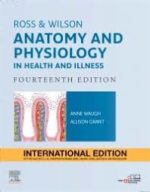
Ross and Wilson;Anatomy and Physiology in Health and Illness. International Edition, 14th Edition
KSh 8,000.00Now in its fourteenth edition, this best-selling textbook has been honed over many years to provide a clear, straightforward introduction to the human body for students of nursing, allied health or biomedical and paramedical science.
The book covers the core essentials of anatomy and physiology, including basic pathology and pathophysiology of important diseases and disorders. This new edition presents additional illustrations to enhance understanding of key concepts, including pathophysiology and diagnostics. Included for the first time is an introduction to surface anatomy, while other updating reflects current scientific knowledge and developments, including coronavirus. Enhanced learning features and an extensive online resource help you grasp all the important areas.
Like millions of readers before you, you will treasure Ross & Wilson as a go-to resource that you will refer to time and again to support this critical aspect of your healthcare education.
Key Features-
- Clear and easy to read – suitable for students new to the area and anyone whose first language is not English
-
- Hundreds of stunning illustrations and images to make learning easy
-
- Helpful learning features such as Learning Outcomes boxes, colour coding and orientation icons to facilitate navigation
-
- Definitions of common prefixes, suffixes and roots, examples, glossary and an appendix of normal biological values
-
- Self-assessment activities in each chapter, including ‘spot check’ questions for each section and case studies with answers to develop understanding of key principles
- Accompanying website with animations, videos, audio-glossary and other self-assessment material
Evolve Study Resources
Online content offered with Ross & Wilson Anatomy and Physiology in Health and Illness 14th edition includes:
-
- New for this edition – a set of expert-narrated 3D videos summarizing key topics in the book, powered by Complete Anatomy: the world’s most advanced 3D anatomy platform
-
- Over 120 animations clarifying underlying principles and make learning fun
-
- More than 1700 audio glossary entries
-
- Body Spectrum © online colouring and self-test software
- Self-assessment questions to help students test their knowledge
Author InformationBy Anne Waugh, MSc CertEd SRN RNT FHEA, School of Acute and Continuing care Nursing, Napier University, Edinburgh, UK and Allison Grant, BSc PhD RGN, Department of Biological and Biomedical Sciences, Glasgow Caledonian University, Glasgow, UK -
-
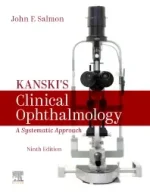
Kanski’s Clinical Ophthalmology A Systematic Approach
KSh 24,646.00Through eight outstanding editions, Kanski’s Clinical Ophthalmology has been the classic specialty textbook, providing the perfect ophthalmology foundation for trainees and a valuable reference source for experienced practitioners. Building on the previous edition by Dr. Brad Bowling, Dr. John Salmon from Oxford University has comprehensively revised the textbook. The 9th Edition retains Dr. Kanski’s highly effective format of succinct text and visually dynamic presentation, providing authoritative, focused guidance on the diagnosis and management of ophthalmic disorders. Extremely well organized and comprehensive in scope, this visually stunning book reflects the latest advances in the field, facilitating quick comprehension to enhance learning, aid exam preparation and guide clinical practice. As a general ophthalmic textbook, this is the gold standard.
-
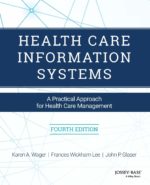
Health Care Information Systems: A Practical Approach for Health Care Management 4th Edition
KSh 15,000.00BESTSELLING GUIDE, UPDATED WITH A NEW INFORMATION FOR TODAY’S HEALTH CARE ENVIRONMENT
Health Care Information Systems is the newest version of the acclaimed text that offers the fundamental knowledge and tools needed to manage information and information resources effectively within a wide variety of health care organizations.
It reviews the major environmental forces that shape the national health information landscape and offers guidance on the implementation, evaluation, and management of health care information systems. It also reviews relevant laws, regulations, and standards and explores the most pressing issues pertinent to senior level managers. It covers:
Proven strategies for successfully acquiring and implementing health information systems.
Efficient methods for assessing the value of a system.
Changes in payment reform initiatives.
New information on the role of information systems in managing in population health.
A wealth of updated case studies of organizations experiencing management-related system challenges. -
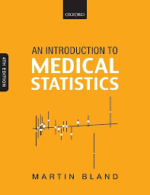
An Introduction to Medical Statistics 4th Revised ed. Edition
KSh 6,860.00Now in its Third Edition, An Introduction to Medical Statistics contin ues to be and invaluable textbook for medical students, doctors, medic al researchers, nurses, members of professionals allied to medicine as well as those concerned with medical data. The material covered inclu des all the statistical work that would be required for a course in me dicine and for the examinations of most of the Royal Colleges. It incl udes the design of clinical trials and epidemiological studies, data c ollection, summarizing and presenting data, probability, standard erro r, confidence intervals and significance tests, techniques of data ana lusis including multifactorial methods and the choice of statistical m ethod, problems of medical measurement and diagnosis, vital statistics, and calculation of sample size.
Be the first to review “communicable diseases”