
This manual covers the full range of communicable diseases in the African region: skin infections, malaria and other vector-borne diseases.
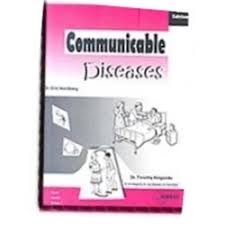
communicable diseases
KSh 3,000.00
This manual covers the full range of communicable diseases in the African region: skin infections, malaria and other vector-borne diseases.
5 in stock
Customer Reviews
There are no reviews yet.
Related products
-

An Introduction to Forensic Genetics 1st Edition
KSh 12,600.00An Introduction to Forensic Genetics is a comprehensive introduction to this fast moving area from the collection of evidence at the scene of a crime to the presentation of that evidence in a legal context. The last few years have seen significant advances in the subject and the development and application of genetics has revolutionised forensic science.
This book begins with the key concepts needed to fully appreciate the subject and moves on to examine the latest developments in the field, illustrated throughout with references to relevant casework. In addition to the technology involved in generating a DNA profile, the underlying population biology and statistical interpretation are also covered. The evaluation and presentation of DNA evidence in court is discussed as well with guidance on the evaluation process and how court reports and statements should be presented.
- An accessible introduction to Forensic Genetics from the collection of evidence to the presentation of that evidence in a legal context
- Includes case studies to enhance student understanding
- Includes the latest developments in the field focusing on the technology used today and that which is likely to be used in the future
- Accessible treatment of population biology and statistics associated with forensic evidence
This book offers undergraduate students of Forensic Science an accessible approach to the subject that will have direct relevance to their courses. An Introduction to Forensic Genetics is also an invaluable resource for postgraduates and practising forensic scientists looking for a good introduction to the field.
-
Health Care Information Systems: A Practical Approach for Health Care Management 4th Edition
KSh 15,000.00BESTSELLING GUIDE, UPDATED WITH A NEW INFORMATION FOR TODAY’S HEALTH CARE ENVIRONMENT
Health Care Information Systems is the newest version of the acclaimed text that offers the fundamental knowledge and tools needed to manage information and information resources effectively within a wide variety of health care organizations.
It reviews the major environmental forces that shape the national health information landscape and offers guidance on the implementation, evaluation, and management of health care information systems. It also reviews relevant laws, regulations, and standards and explores the most pressing issues pertinent to senior level managers. It covers:
Proven strategies for successfully acquiring and implementing health information systems.
Efficient methods for assessing the value of a system.
Changes in payment reform initiatives.
New information on the role of information systems in managing in population health.
A wealth of updated case studies of organizations experiencing management-related system challenges. -

Wong’s Nursing Care of Infants and Children 11th Edition
KSh 9,660.00Wong’s Nursing Care of Infants and Children, 11th Edition takes a unique, easy-to-follow developmental approach to describe the care of children at each age and stage of development. This longtime bestseller provides an evidence-based, clinical perspective that shows how the quality of nursing care can impact quality patient outcomes. Childhood diseases and disorders are organized by age groups and body systems and explained through the nursing process framework. This edition features completely updated and reorganized chapters that present content in a clear, easy-to-understand way. New Quality Indicator boxes paint a bigger picture of hospitals and how they look at quality and safety.
- A focus on family-centered care emphasizes the role and influence of the family in health and illness with a separate chapter and Family-Centered Care boxes.
- Emergency Treatment boxes serve as a quick reference in critical situations.
- Pathophysiology Reviews explain complicated disease processes with illustrated summary boxes.
- Quality Patient Outcomes are discussed for major childhood diseases and disorders, showing how nursing care directly impacts patient outcomes.
- Nursing Tips include helpful hints and practical, clinical information.
- Critical Thinking Case Studies help you test and develop your own analytical skills.
- Cultural Considerations provide cultural tips from clinical experts.
- Nursing Care Plans provide models for planning patient care, with rationales explaining why specific nursing interventions have been chosen, and include nursing diagnoses, patient/family goals, nursing interventions/rationales, expected outcomes, and NIC and NOC guidelines.
- Nursing Care Guidelines offer clear, step-by-step, detailed instructions on performing specific skills or procedures.
- Translating Evidence into Practice and Applying Evidence to Practice boxes help you apply research to support, guide, and improve the outcomes of nursing care.
- Atraumatic Care boxes contain techniques for care that minimize pain, discomfort, or stress, and provide guidance for performing procedures in a caring manner.
- Community and Home Health Considerations boxes focus on wellness information and illness-related topics.
- Drug Alerts highlight important drug-related information for safe, appropriate care.
- Nursing Alerts provides critical information that must be considered in providing care.
- Research Focus boxes emphasize research with concise reviews of important evidence.
- Nursing Alerts provides critical information that must be considered in providing care.
-
The Brain That Changes Itself
KSh 1,095.00An astonishing new science called neuroplasticity is overthrowing the centuries-old notion that the human brain is immutable. Psychiatrist and psychoanalyst Norman Doidge, travelled around the US to meet both the brilliant scientists championing neuroplasticity and the people whose lives they’ve transformed – people whose mental limitations or brain damage were seen as unalterable. We see a woman born with half a brain that rewired itself to work as a whole, blind people who learn to see, learning disorders cured, IQs raised, aging brains rejuvenated, stroke patients learning to speak, children with cerebral palsy learning to move with more grace, depression and anxiety disorders successfully treated, and lifelong character traits changed. Using these marvellous stories to probe mysteries of the body, emotion, love, sex, culture, and education, Dr. Doidge has written an immensely moving, inspiring book that will permanently alter the way we look at our brains, human nature, and human potential.
-

Introduction to Epidemiology
KSh 4,820.00Recognized by Book Authority as one of the best Public Health books of all time, Introduction to Epidemiology is a comprehensive, reader-friendly introduction to this exciting field. Designed for students with minimal training in the biomedical sciences and statistics, this full-color text emphasizes the application of the basic principles of epidemiology according to person, place, and time factors in order to solve current, often unexpected, and serious public health problems.Students will learn how to identify and describe public health problems, formulate research hypotheses, select appropriate research study designs, manage and analyze epidemiologic data, interpret and apply results in preventing and controlling disease and health-related events. With real-world examples in the form of case studies and news files in each chapter, Introduction to Epidemiology is an accessible and effective approach to learning epidemiology.The Eighth Edition features:- Same organization as the prior edition allowing for easier transition- New or expanded coverage of the models of causation, methods of age adjustment, age-period cohort models, incubation and latency periods, and receiver operating characteristic (ROC) curves- Clearer connection between statistical inference and causal inference- New and updated practical examples and News Files help solidify concepts and show real-world application- Updated tables and figures throughout- Access to Navigate 2 online learning materials, including a comprehensive and interactive eBook, student practice activities and assessments, learning analytics reporting tools, and more- A built-in adaptive learning feature enables students to take self-assessments before or after reading a chapter. Based on their performance they can map out their own custom study plan that directs them to the areas of the text to review.
-
OSCE in Obstetrics and Gynecology
This textbook is in accord with the motto of FOGSI which is dissemination of updated knowledge and education in the ever-expanding science of Obstetrics and Gynecology. It is a unique bank of practically based OSCE questions and answers based on the latest clinical guidelines which contains elaborative information in a very reader-friendly colorful layout. This book has been primarily written for undergraduate and postgraduate students to guide them in their preparation for their professional examinations. However, it will be a very handy and informative bank of knowledge, especially on the practical and clinical aspects of obstetrics and gynecology for all practitioners as well.
- This is a one-of-a-kind textbook purely based on the format of OSCE, i.e., Objectively Structured Clinical Examination stations, covering the fields of Obstetrics as well as Gynecology exhaustively.
- Liberal use of pictures and illustrations will not only aid the students in their preparation but also make the process of reading enjoyable.
- An exhaustive collection of chapters ranging from the basics of Obstetrics and Gynecology to recent advances like Endoscopy in Gynecology, Reproductive Medicine, and Imaging in Obstetrics.
- Topics like Fetal Ultrasound in First and Second Trimester, Screening and Congenital Malformations have been extensively covered with the help of images and illustrations making the topics simple and easy to understand.
- Liberty has been taken to provide detailed answers of some topics as well as pertinent references for further reading.
-
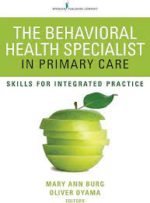
The Behavioral Health Specialist in Primary Care: Skills for Integrated Practice
KSh 12,600.00Patients with chronic conditions often need psychosocial support and brief counseling to help them make the lifestyle and behavioral changes required to prevent disease complications. This innovative text, with contributions from respected clinicians and researchers in all arenas of behavioral health, provides comprehensive training for all health professionalsóincluding those in medicine, nursing, social work, mental health, and clinical and health psychologyówho desire targeted evidence-based training in behavioral health skills. Rich case examples drawn from typical patient presentations demonstrate the relationship between physical and psychological health and the complexity of behavioral change in chronic illness.
This text is a timely, relevant, and practical resource for all members of the primary care team. It prepares team members to work in the model of patient-centered integrated care in accordance with the recommendations of the Affordable Care Act (ACA) and the National Committee for Quality Assurance (NCQA) medical home standards for identifying patient needs and providing coordinated and comprehensive patient care. The book focuses on knowledge and skills needed for working with the most common chronic conditions such as diabetes, obesity, chronic pain, cardiovascular conditions, sleep disorders, geriatric conditions, cancer-related conditions, and substance abuse. It includes chapters on epidemiological trends in chronic illness and systems medicine. Theories of health behavior and behavioral change and evidence-based interventions provide a foundation for skill development, followed by detailed coverage of the requirements for behavioral management of specific chronic conditions. Sample referrals and consultation notes provide concrete examples of how the behavioral health specialist might respond to a referral.
KEY FEATURES:
- Provides comprehensive graduate-level training for the role of Behavioral Health Specialist
- Describes the health promotion and counseling skills needed to function as part of an integrated health team
- Focuses on proficiencies needed for working with common chronic conditions
- Addresses the psychosocial components of primary care disorders
- Includes case examples demonstrating the relationship between physical and psychological health and the complexity of behavioral change in chronic illness
-
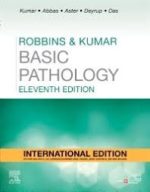
Robbins & Kumar Basic Pathology. International Edition, 11th Edition
KSh 9,500.00Readable, well-illustrated, and concise, Robbins and Kumar Basic Pathology, 11th Edition, offers today’s busy students a rich understanding of all essential pathology concepts from trusted names in the field. This updated edition thoroughly covers key pathologic processes and the time-honored tools of gross and microscopic analysis, while also retaining a strong emphasis on clinicopathologic correlations and the impact of molecular pathology on the practice of medicine. Outstanding artwork and schematic drawings, as well as a robust eBook experience with extensive additional features, make complex concepts easier to learn and retain.
Key Features-
- Includes fully updated clinical topics throughout.
-
- Features high-quality photomicrographs, gross photos, and radiologic images, as well as new artwork and over 150 new schematic diagrams that help summarize key or complex disease mechanisms.
-
- Contains a new Rapid Review section that uses bulleted summary boxes to deliver essential take-home messages and help you focus on the fundamentals.
-
- Includes tables of relevant laboratory tests for each chapter that link pathophysiology of disease and diagnostic testing.
- Highlights pathogenesis, morphology, and pathophysiologic content throughout.
- Features increased representation of diverse populations throughout the text, including clinical photographs of skin lesions in multiple skin types and a new section on the role of socially defined race in health disparities.
Author InformationEdited by Vinay Kumar, MBBS, MD, FRCPath, Professor and Chairman, Department of Pathology, University of Chicago, Pritzker School of Medicine, Chicago, IL, USA; Abul K. Abbas, MBBS, Emeritus Professor, Department of Pathology, University of California San Francisco, USA; Jon C. Aster, MD, PhD, Professor, Department of Pathology, Harvard Medical School; Brigham and Women’s Hospital, Boston, Massachusetts, USA and Andrea T Deyrup, M.D., Ph.D., Associate Professor Department of Pathology Duke University Medical Center -
Be the first to review “communicable diseases”