
The book covers the important aspects of water, air and noise pollution. Using a multidisciplinary approach, it highlights the impact of environmental pollution in the world. It also suggests methods for controlling and scientific monitoring of pollution-causing agents. Also included are chapters on efficient guidelines and standards, radioactive waste, solid waste disposal and sewage treatment, oil pollution and role of insecticides. Pollution in tanneries, fertilizer industry, and pulp and paper industries is also covered. The last few chapters are devoted to environmental management, benefit-cost analysis and mathematical modelling for environmental pollution control.
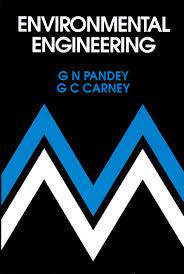
Environmental Engineering Paperback – 14 July 2017
KSh 7,500.00
The book covers the important aspects of water, air and noise pollution. Using a multidisciplinary approach, it highlights the impact of environmental pollution in the world. It also suggests methods for controlling and scientific monitoring of pollution-causing agents. Also included are chapters on efficient guidelines and standards, radioactive waste, solid waste disposal and sewage treatment, oil pollution and role of insecticides. Pollution in tanneries, fertilizer industry, and pulp and paper industries is also covered. The last few chapters are devoted to environmental management, benefit-cost analysis and mathematical modelling for environmental pollution control.
3 in stock
| Author | G N Pandey |
|---|
Customer Reviews
There are no reviews yet.
Related products
-

ENVIRONMENTAL ENGEENIRING
KSh 4,200.00The standard for Environmental Engineering FE Review includes;
- 110 practice problems, with full solutions
- Set up to provide in depth analysis of likely FE exam problems
- This guide will get anyone ready for the FE Exam
Topics covered
- Air Quality Engineering
- Environmental Science & Management
- Solid & Hazardous Waste Engineering
- Water & Wastewater Engineering
- Hydrologic and Hydrogeological Engineering
-
Writing for Engineers (Bloomsbury Study Skills, 31)
KSh 4,620.00This book is full of practical advice and useful examples to help students and engineers write clearly, accurately and impressively. This updated fourth edition features new material on technical notes, inspection reports and business cases, along with abstracts and summaries. It is an essential aid for today’s engineers.
-
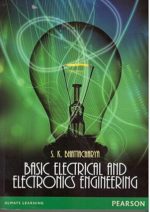
Basic Electrical and Electronics Engineering
This book provides an overview of the basics of electrical and electronic engineering that are required at the undergraduate level. Efforts have been taken to keep the complexity level of the subject to bare minimum so that the students of non electrical/electronics can easily understand the basics. It offers an unparalleled exposure to the entire gamut of topics such as Electricity Fundamentals, Network Theory, Electro-magnetism, Electrical Machines, Transformers, Measuring Instruments, Power Systems, Semiconductor Devices, Digital Electronics and Integrated Circuits.
-
Handbook of Vegetable Science and Technology
KSh 10,200.00“Furnishes exhaustive, single-source coverage of the production and postharvest technology of more than 70 major and minor vegetables grown in tropical, subtropical, and temperate regions throughout the world. Provides comparative data for each vegetable presented. “
-

Agricultural Marketing and Price Analysis
KSh 9,330.00Norwood and Lusk provide a fresh approach to marketing and price analysis that speaks to undergraduate students. In addition to providing thorough coverage of core topics, they address exciting developments and emerging areas of research in the field. Friendly and engaging, Agricultural Marketing and Price Analysis presents a comprehensive approach to agricultural price analysis, agricultural market structures, and agricultural marketing strategies.
Unique to this book is the inclusion of the equilibrium displacement model and a chapter on consumer behavior and research. The Meet the Professional feature illustrates how the economic principles covered fit into the careers students will soon enter. End-of-chapter crossword puzzles and study questions assist in learning terminology and test preparation. Succinct and approachable, this text sets the stage for an enjoyable and effective learning experience.
-

Research Methods for Engineers
KSh 6,300.00Learn how to plan for success with this hands-on guide to conducting high-quality engineering research. Plan and implement your next project for maximum impact: step-by-step instructions cover every stage in engineering research, from the identification of an appropriate research topic through to the successful presentation of results. Improve your research outcomes: discover essential tools and methods for producing high-quality, rigorous research, including statistical analysis, survey design, and optimisation techniques. Research with purpose and direction: clear explanations, real-world examples, and over 50 customisable end-of-chapter exercises, all written with the practical and ethical considerations of engineering in mind. A unique engineering perspective: written especially for engineers, and relevant across all engineering disciplines, this is the ideal book for graduate students, undergraduates, and new academics looking to launch their research careers.
-
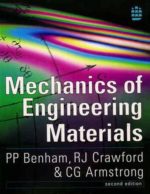
Mechanics of Engineering Materials (2nd Edition)
Mechanics of Engineering Materials is well-established as the definitive textbook on the mechanics and strength of materials for students of engineering principles throughout their degree course. Assuming little or no prior knowledge, the theory of the subject is developed from first principles and all topics of stress and strain analysis are covered right up to final year level. Mechanical properties such as tensile behaviour, fatigue, creep, fracture and impact are discussed and more advanced material is also included, particularly on finite element analysis, fracture mechanics and composite materials.
This second edition has been brought fully up-to-date in line with today’s courses. Incorporating new, two-colour illustrations throughout, the book reinforces student comprehension of the theory through numerous new worked examples and end-of-chapter problems involving real engineering situations. An important new feature of this edition is the use and illustration of computer spreadsheets throughout as a powerful problem-solving tool.
Mechanics of Engineering Materials is an indispensible course text for undergraduate students of mechanical engineering, engineering science and civil engineering. It will also be a valuable reference for those studying BTEC and GNVQ courses.
-

Elements of Enviromental Engineering-Dr K.N. Duggal
KSh 2,586.00The key features include: the important principles and practices of Sanitary Engineering, as they are understood and generally applicable in our country today, have been fully delineated so that it may be easy for the students preparing for various examinations; the treatment of the subject has been kept exhaustive, sufficiently simple without sacrificing the fundamentals involved; and, effort has been made to keep the information as much up-to-date and compact as possible, and with that view, some references have been made to the relevant Indian Standard Specifications, so that to the engineers in the profession, it may also prove to be of use. The book is broadly split up into four parts. Part I deals exclusively with the subject of “Water Supply”, Part II describes “Sewerage and Sewage Treatment”, Part III “Water Supply and Drainage of Buildings” and Part IV “Environmental Sanitation”, which includes only some of the more important topics of the day viz., Refuse Sanitation, Ventilation and Air-conditioning, Air Pollution, and Malaria, incidental to Engineering. A number of selective questions of the various Indian Universities and other examinations have been given towards the end of each chapter to serve as an exercise to the problems duly solved in the chapter. The last 2-3 decades have seen tremendous research and development in the fields of water treatment and sewage/wastewater treatment. New concepts like unit operations in water treatment and unit operation and processes, in particular biological processes, in sewage/wastewater treatment have been introduced. Besides topics like defluoridation, demineralization and wastewater reclamation have evoked considerable interest and attention. To reflect these changes, this book has been revised to make it updated, with the latest information on these topics. The readers will find the book more appropriate and useful to their needs.
Be the first to review “Environmental Engineering Paperback – 14 July 2017”