
Build a working medical vocabulary quickly with Chabner’s Medical Terminology: A Short Course, 9th Edition! Omitting time-consuming, nonessential information, this text helps you master the basics of medical vocabulary — including the most frequently encountered suffixes, prefixes, and word roots. A text/workbook format lets you practice and interact with medical terminology on almost every page through exercises, labeling, and pronunciations. Case studies and real-world vignettes demonstrate how medical terms are used in practice. With all this plus medical animations, word games, and flash cards on the Evolve website, you’ll be amazed at how easily medical terminology becomes part of your vocabulary.
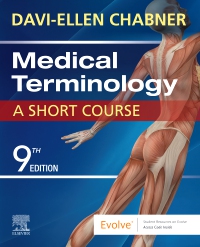
Medical Terminology: A Short Course, 9th Edition
KSh 11,100.00
Build a working medical vocabulary quickly with Chabner’s Medical Terminology: A Short Course, 9th Edition! Omitting time-consuming, nonessential information, this text helps you master the basics of medical vocabulary — including the most frequently encountered suffixes, prefixes, and word roots. A text/workbook format lets you practice and interact with medical terminology on almost every page through exercises, labeling, and pronunciations. Case studies and real-world vignettes demonstrate how medical terms are used in practice. With all this plus medical animations, word games, and flash cards on the Evolve website, you’ll be amazed at how easily medical terminology becomes part of your vocabulary.
1 in stock
Customer Reviews
There are no reviews yet.
Related products
-

The Great Influenza: The Story of the Deadliest Pandemic in History -Paperback
KSh 650.00Magisterial in its breadth of perspective and depth of research, The Great Influenza provides us with a precise and sobering model as we confront the epidemics looming on our own horizon. As Barry concludes, “The final lesson of 1918, a simple one yet one most difficult to execute, is that…those in authority must retain the public’s trust. The way to do that is to distort nothing, to put the best face on nothing, to try to manipulate no one. Lincoln said that first, and best. A leader must make whatever horror exists concrete. Only then will people be able to break it apart.”
At the height of World War I, history’s most lethal influenza virus erupted in an army camp in Kansas, moved east with American troops, then exploded, killing as many as 100 million people worldwide. It killed more people in twenty-four months than AIDS killed in twenty-four years, more in a year than the Black Death killed in a century. But this was not the Middle Ages, and 1918 marked the first collision of science and epidemic disease.
-

Management Principles for Health Professionals
KSh 7,420.00Management Principles for Health Professionals is a practical guide for new or future practicing healthcare managers. The customary activities of the manager―planning, organizing, decision making, staffing, motivating, and budgeting―are succinctly defined, explained, and presented with detailed examples drawn from a variety of health care settings. Students will learn proven management concepts, techniques, models, and tools for managing individuals or teams with skill and ease. The Eighth Edition continues to present foundational principles of management in the context of contemporary health care. With timely coverage of such topics as medical cost sharing; use of robots; ER by appointment; increased use of observation units; renewed use of flextime staffing and scheduling; use of social media on the job, and more, this thoroughly updated text addresses the latest trends and issues that today’s health care manager is likely to encounter. Key Features – Presents 2 new tools ―The Manager’s Wheel Book and the Management Reference Portfolio ― to help new managers better understand their role and responsibilities and to aid existing managers in understanding their organization in detail – Covers managing care in a wide variety of health care settings (urgent care centers, specialty clinics, home care, etc.) outside of the traditional hospital setting. – Addresses technology and its impact, including eVisits/telemedicine, implementation of electronic health records, connectivity and the expectation that workers will respond during off hours via email and instant messaging, etc. – Offers expanded coverage on the importance and impact of corporate culture, the values of transparency and accountability, leadership style, and competitiveness. – Includes detailed examples of reports, plans, directives, union contracts, and more.
-
Medical Microbiology, International Edition, 19th Edition
KSh 7,462.00Medical microbiology concerns the nature, distribution and activities of microbes and their impact on health and wellbeing. In spite of the introduction of many antimicrobial agents and immunisations, we continue to face major challenges in combatting infection, not least the gathering crisis in antimicrobial resistance.
Now in a fully revised and updated 19th edition, Medical Microbiology provides comprehensive coverage of infection from the microbial perspective, combining a clear introduction to key principles with a focus explicitly geared to modern clinical practice. It provides ideal coverage for medical and biomedical students – with ‘Key Points’ boxes throughout to highlight the essentials – and sufficient detail to also inform specialists in training.
Building on the success of previous editions, updates in Medical Microbiology 19e include:
-
- New and expanded coverage of hot topics and emerging areas important to clinical practice, including:
-
-
- Genomics
-
-
-
- The Human Microbiome
-
-
-
- Direct acting antiviral agents for the treatment of HCV infection
-
-
-
- Molecular methods in diagnostic microbiology
-
-
-
- Antibiotic Stewardship
-
-
- BONUS electronic materials to enhance your learning, including:
-
-
- Clinical cases – to introduce how patients with infections present and help relate key principles to practice
-
-
- MCQs for each chapter – to check understanding and aid exam preparation
-
-
Pocket Tutor Orthopaedics
KSh 5,500.00Titles in the Pocket Tutor series give practical guidance on subjects that medical students and foundation doctors need help with “on the go”, at a highly affordable price that puts them within reach of those rotating through modular courses or working on attachment.
- Common investigations (ECG, imaging, etc)
- Clinical skills (patient examination, etc.)
- Clinical specialties that students perceive as too small to merit a textbook (psychiatry, renal medicine)
Key points
- Practical, accessible introduction to a subject that students find daunting, but which juniors will encounter as part of orthopaedic and emergency rotations
- Logical, sequential content: relevant basic science; then chapters devoted to the clinical essentials of orthopaedics and the disorders and injuries seen most commonly in practice
- Descriptions of common disorders are enhanced by Clinical Scenarios (Patient presents with…), which help students and trainees to recognise and manage common presenting problems
-
Muir’s Textbook of Pathology
KSh 3,800.00First published in 1924, Muir’s Textbook of Pathology has set a standard in this subject by linking the scientific aspects that underlie pathological processes, relating these pathological changes specific to the various organ systems, and placing all in context for the student of clinical
medicine and surgery. Subsequent editions have retained this popular approach, while introducing novel concepts and taking into account the evolution in the teaching of general pathology that has occurred.This fully-revised 14th edition will ensure that the title retains its preeminence in the field with a clearly defined and easy-to-follow structure, new photographs and explanatory line diagrams, all in full color, and applicability to both systems-based and problem-based undergraduate courses.
Focusing on core material without neglecting up-to-the-minute detail, this book is a key text for students, but also has significant appeal for pathology residents. -
The Handbook of Medical Image Perception and Technique
KSh 11,200.00This state-of-the-art book reviews key issues and methods in medical image perception research through associated techniques, illustrations and examples. Written by key figures in the field, the book covers a range of topics including the history of medical image perception research, the basics of vision and cognition, and dedicated application areas, especially those concerned with the interface between the clinician and the display of medical image data. It summarizes many of the basic techniques used to conduct and analyze medical image perception and observer performance research, allowing readers to understand basic research techniques so they can adopt them for use in their own studies. Written for both newcomers to the field and experienced researchers, this book provides a broad overview of medical image perception, and will serve as a reference volume for years to come.
-

Davidson’s Principles and Practice of Medicine, 24th Edition(paperback)
KSh 10,640.00Well over two million medical students, doctors and other health professionals around the globe have owned a copy of Davidson’s Principles and Practice of Medicine since it was first published over 70 years ago. Now in its 24th Edition, this thoroughly updated textbook describes the pathophysiology and clinical features of the most frequently encountered conditions in the major specialties of adult medicine, and explains how to recognise, investigate, diagnose and manage them. Taking its origins from Sir Stanley Davidson’s much-admired lecture notes, Davidson’s has endured because it keeps pace with how modern medicine is taught and provides a wealth of trusted information in an easy-to-read, concise and beautifully illustrated format.
Key features:
-
- Part 1 ‘Fundamentals of Medicine’ – provides an account of the principles of genetics, immunology, infectious diseases, population health, oncology and pain management, along with a discussion of the core principles behind clinical decision-making and good prescribing.
-
- Part 2 ‘Emergency and Critical Care Medicine’ – covers medical emergencies in poisoning, envenomation and medicine in austere environments, as well as common presentations in acute medicine and the recognition and management of the critically ill.
-
- Part 3 ‘Clinical Medicine’– covers the major medical specialties, each thoroughly revised and brought fully up to date. A new section on COVID-19 has been added and the impact of this infection is described throughout the book.
-
- Clinical Examination overviews – extended and updated to summarise the main elements for each system.
-
- Presenting Problems sections – provide a clear pathway for the assessment of and approach to the most common complaints in each specialty.
-
- Practice Point summaries – detail the practical skills that medical students and junior doctors must acquire.
-
- Emergency boxes – emphasise the core knowledge needed to manage acutely ill patients.
-
- In Old Age, In Pregnancy and In Adolescence boxes – highlight differences in the practice of medicine in these patient groups, and illustrate the interfaces between medical, obstetric and paediatric services.
-
- The text is extensively illustrated – with over 1000 diagrams, clinical photographs, and radiology and pathology images.
- The global perspective is enhanced by an International Advisory Board of experts from 11 countries and by leading authors from around the world.
-

Be the first to review “Medical Terminology: A Short Course, 9th Edition”