
Build a working medical vocabulary quickly with Chabner’s Medical Terminology: A Short Course, 9th Edition! Omitting time-consuming, nonessential information, this text helps you master the basics of medical vocabulary — including the most frequently encountered suffixes, prefixes, and word roots. A text/workbook format lets you practice and interact with medical terminology on almost every page through exercises, labeling, and pronunciations. Case studies and real-world vignettes demonstrate how medical terms are used in practice. With all this plus medical animations, word games, and flash cards on the Evolve website, you’ll be amazed at how easily medical terminology becomes part of your vocabulary.
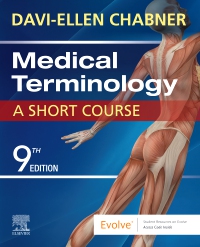
Medical Terminology: A Short Course, 9th Edition
KSh 11,100.00
Build a working medical vocabulary quickly with Chabner’s Medical Terminology: A Short Course, 9th Edition! Omitting time-consuming, nonessential information, this text helps you master the basics of medical vocabulary — including the most frequently encountered suffixes, prefixes, and word roots. A text/workbook format lets you practice and interact with medical terminology on almost every page through exercises, labeling, and pronunciations. Case studies and real-world vignettes demonstrate how medical terms are used in practice. With all this plus medical animations, word games, and flash cards on the Evolve website, you’ll be amazed at how easily medical terminology becomes part of your vocabulary.
1 in stock
Customer Reviews
There are no reviews yet.
Related products
-

Robbins & Cotran Pathologic Basis of Disease, 10th Edition
KSh 18,480.00Readable and highly illustrated, Robbins and Cotran Pathologic Basis of Disease, 10th Edition presents an in-depth, state-of-the-art overview of human diseases and their cellular and molecular basis. This best-selling text delivers the latest, most essential pathology knowledge in a readable, interesting manner, ensuring optimal understanding of the latest basic science and clinical content. More than 1,000 high-quality photographs and full-color illustrations highlight new information in molecular biology, disease classifications, new drugs and drug therapies, and much more. This superb learning package also includes an enhanced eBook with a full complement of ancillary content on Student Consult
-
Bailey & Love’s Essential Clinical Anatomy 27th Edition
KSh 20,160.00Bailey & Love is the world famous textbook of surgery. Its comprehensive coverage includes the scientific basis of surgical practice, investigation, diagnosis, and pre-operative care. Trauma and Orthopaedics are included, as are the subspecialties of plastic and reconstructive, head and neck, cardiothoracic and vascular, abdominal and genitourinary surgery. The user-friendly format includes photographs, line diagrams, learning objectives, summary boxes, biographical footnotes, memorable anecdotes and full-colour page design. This book’s reputation for unambiguous advice make it the first point of reference for student and practising surgeons worldwide.
-

Oxford Handbook of Clinical Specialties (Oxford Medical Handbooks
KSh 6,580.00Now in its 25th year, the Oxford Handbook of Clinical Specialties has been revised and updated by a trusted author team to bring you practical, up-to-date clinical advice and a unique outlook on the practice of medicine. Twelve books in one, this is the ultimate guide to the core clinical
specialties for students, junior doctors, and specialists.This edition features a new and improved referencing system guided by a team of junior doctors, ensuring that the text is packed with valuable references to the most salient data and guidelines across the specialties. Each chapter has been updated on the advice of a team of specialists, to bring you
everything you need for any eventuality on the ward or in the field. This essential handbook guides the reader through the management of an unprecedented spectrum of conditions and eventualties, from sexual health to major incident management. Compact and filled with high quality artwork, directions
to further reading, and wise advice, this book is an ideal resource for revision and reference on the go.With its companion volume, the Oxford Handbook of Clinical Medicine, the Oxford Handbook of Clinical Specialties offers a unique perspective on the practice of medicine. Filled with wit, wisdom, and humanity, this book draws on literature, history, and personal experience to teach a philosophy of
medicine that always puts the patient at the centre of compassionate care. It is a trustworthy companion for anyone with the spirit of self-improvement and a passion for their practice. -
Essentials of Anatomy and Physiology for Nursing Practice
KSh 7,280.00Effective, holistic nursing is impossible without a firm grasp of how the human body functions, but knowledge of the scientific theory on its own is not enough. Written with the needs of nurses firmly in mind and using the person-centred practice framework as a guiding principle, this book brings anatomy and physiology to life, combining the best of print and online learning into one integrated package. Key features: Connects theory with nursing practice by exploring the science from the perspective of a fictional family Uses a rich array of full-color figures, diagrams, and video material including interactive figures, animations and mini-tutorials – perfect for visual learners Full of engaging activities designed to complement self-directed learning. Supported by a collection of digital resources, including 170 online multiple choice questions, over 800 revision flashcards, and complete access to videos, animations, revision material and action plans. Ideal for revision and consolidating knowledge. Visit https://edge.sagepub.com/essentialaandp to find out more. Get 12 months FREE access to an interactive eBook* when you buy the paperback! (Print paperback version only, ISBN 9781473938465) Each purchase includes 12 months access to an interactive eBook version, meaning you can study when and how you want and make use of additional tools including search, highlighting, annotation note sharing and much more. *interactivity only available through Vitalsource eBook
-
Netter’s Clinical Skills, 1st Edition
KSh 3,080.00Make the most of every patient encounter – from the clinical interview and history to the physical exam, both in-office and bedside. This discreet quick reference by Ilene L. Rosenberg, MD, FCCP, Todd Cassese, MD, FACP, and Dennis Barbon, RN, helps you achieve consistent and comprehensive results when collecting data and determining your next steps. Carry this thin, fully illustrated checklist in your white coat pocket for the fastest, most efficient way to access essential information you need to know and remember every day.
-
The Handbook of Medical Image Perception and Technique
KSh 11,200.00This state-of-the-art book reviews key issues and methods in medical image perception research through associated techniques, illustrations and examples. Written by key figures in the field, the book covers a range of topics including the history of medical image perception research, the basics of vision and cognition, and dedicated application areas, especially those concerned with the interface between the clinician and the display of medical image data. It summarizes many of the basic techniques used to conduct and analyze medical image perception and observer performance research, allowing readers to understand basic research techniques so they can adopt them for use in their own studies. Written for both newcomers to the field and experienced researchers, this book provides a broad overview of medical image perception, and will serve as a reference volume for years to come.
-
Muir’s Textbook of Pathology
KSh 3,800.00First published in 1924, Muir’s Textbook of Pathology has set a standard in this subject by linking the scientific aspects that underlie pathological processes, relating these pathological changes specific to the various organ systems, and placing all in context for the student of clinical
medicine and surgery. Subsequent editions have retained this popular approach, while introducing novel concepts and taking into account the evolution in the teaching of general pathology that has occurred.This fully-revised 14th edition will ensure that the title retains its preeminence in the field with a clearly defined and easy-to-follow structure, new photographs and explanatory line diagrams, all in full color, and applicability to both systems-based and problem-based undergraduate courses.
Focusing on core material without neglecting up-to-the-minute detail, this book is a key text for students, but also has significant appeal for pathology residents. -
Integrative Human Biochemistry: A Textbook for Medical Biochemistry
KSh 13,750.00This book covers in detail the mechanisms for how energy is managed in the human body. The basic principles that elucidate the reactivity and physical interactions of matter are addressed and quantified with simple approaches. Three-dimensional representations of molecules are presented throughout the book so molecules can be viewed as unique entities in their shape and function.
The book is focused on the molecular mechanisms of cellular processes in the context of human physiological situations such as fasting, feeding and physical exercise, in which metabolic regulation is highlighted. Furthermore the book uses key historical experiments that opened up new concepts in Biochemistry to further illustrate how the human body functions at molecular level, helping students to appreciate how scientific knowledge emerges.
This book also:
- Elucidates the foundations of the molecular events of life
Uses key historical experiments that opened up new concepts in Biochemistry to further illustrate how the human body functions at molecular level, helping students to appreciate how scientific knowledge emerges
- Provides realistic representations of molecules throughout the book
Advance Praise for Integrative Human Biochemistry
“This textbook provides a modern and integrative perspective of human biochemistry and will be a faithful companion to health science students following curricula in which this discipline is addressed. This textbook will be a most useful tool for the teaching community.”
- Elucidates the foundations of the molecular events of life
Be the first to review “Medical Terminology: A Short Course, 9th Edition”